Home ยป Business

Timesheet Template

Last updated: August 10, 2026 by Nicole

Answer a few quick questions โ€” how often you track hours, who the sheet is for, what it needs to record โ€” and the maker above builds a timesheet for your specific needs. Then you download it however you like: an Excel spreadsheet that adds up the hours for you, a Word document you can keep editing, a clean PDF for printing or emailing, or a copy you can paste straight into Google Sheets.

Printable Timesheet Templates

The timesheet templates below are ready-made in set formats โ€” if one happens to fit what you need, grab it and go. That said, the maker above is free and builds a timesheet around your own hours, breaks, and overtime rules, so you’ll usually get a better fit by starting there.

timesheet template

Editable / Customizable | Instant Download | Add Your Logo

Daily

basic timesheet

Google Docs | Google Sheets | Word | Editable PDF | Excel Spreadsheet | Image

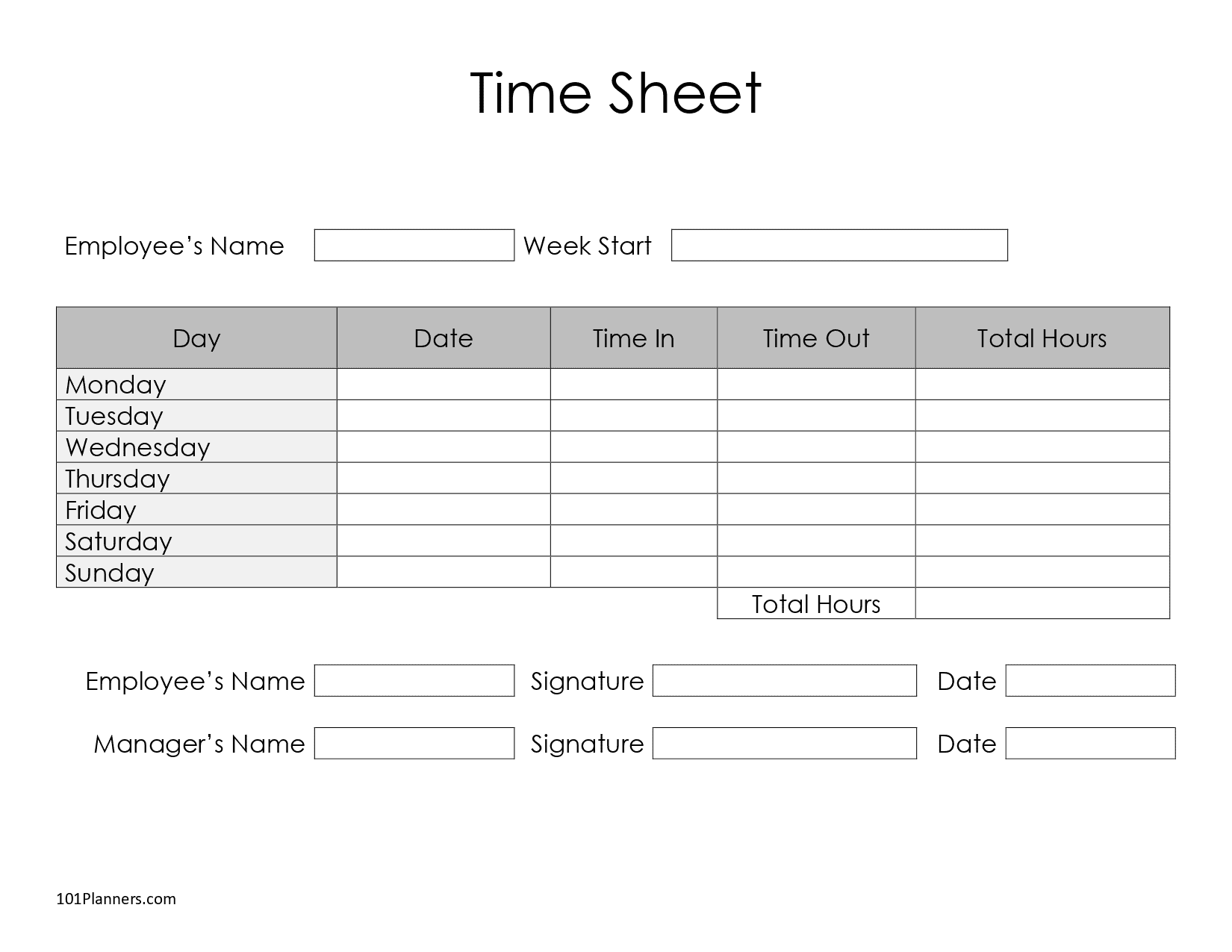
This is a simple timesheet template that tracks the time in and out and the total hours worked each day of the week.

The daily timesheet template lists every day of the week from Monday to Sunday. You can edit the days if you want to start from Sunday or delete some days if necessary.

Weekly

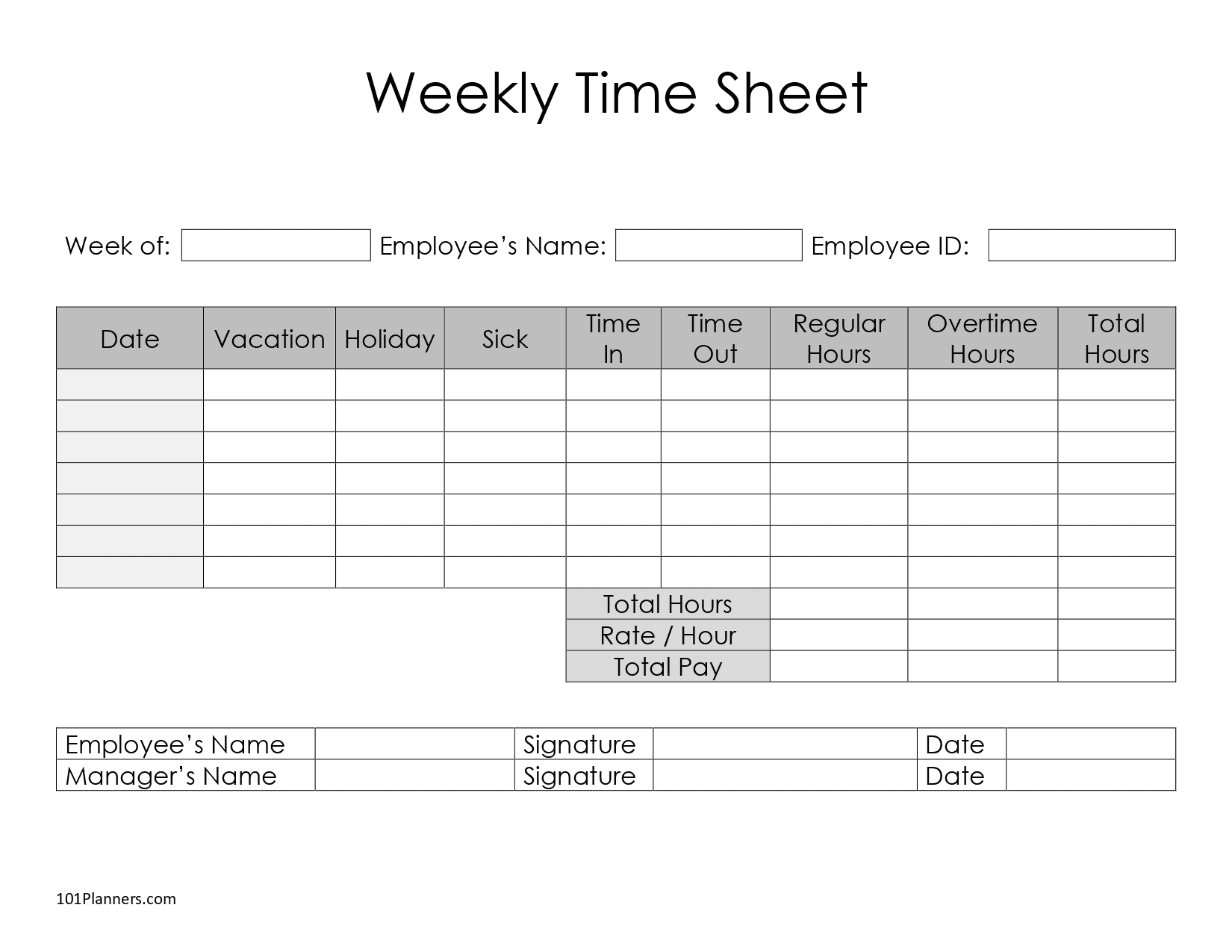
Weekly timesheet with vacation and sick days

Google Docs | Google Sheets | Word | Editable PDF | Excel Spreadsheet | Image

This is a simple timesheet template that tracks the time in and out and the total hours worked each day of the week.

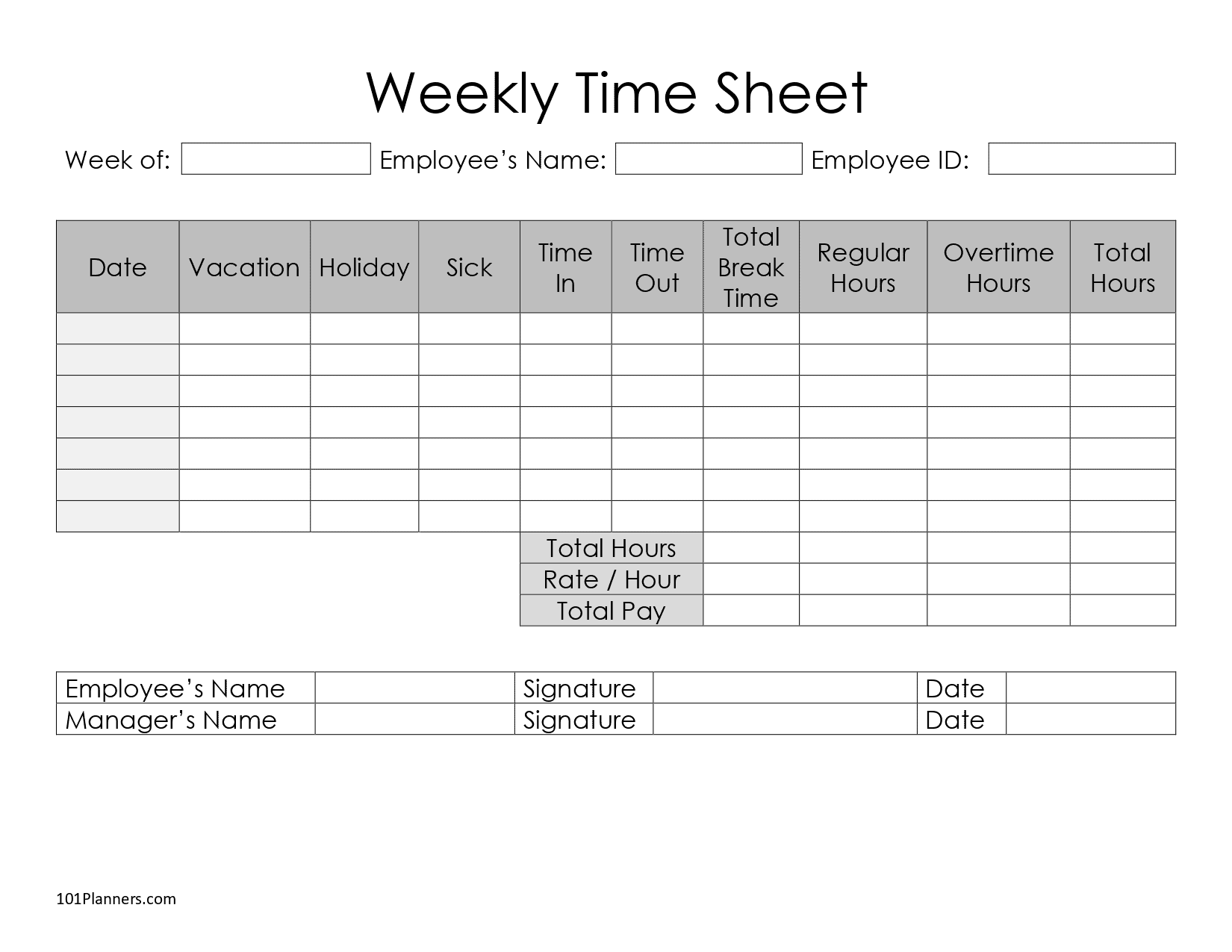
Weekly timesheet - with break time and vacation and sick days

Google Docs | Google Sheets | Word | Editable PDF | Excel Spreadsheet | Image

This is a weekly timesheet with vacation and sick days.

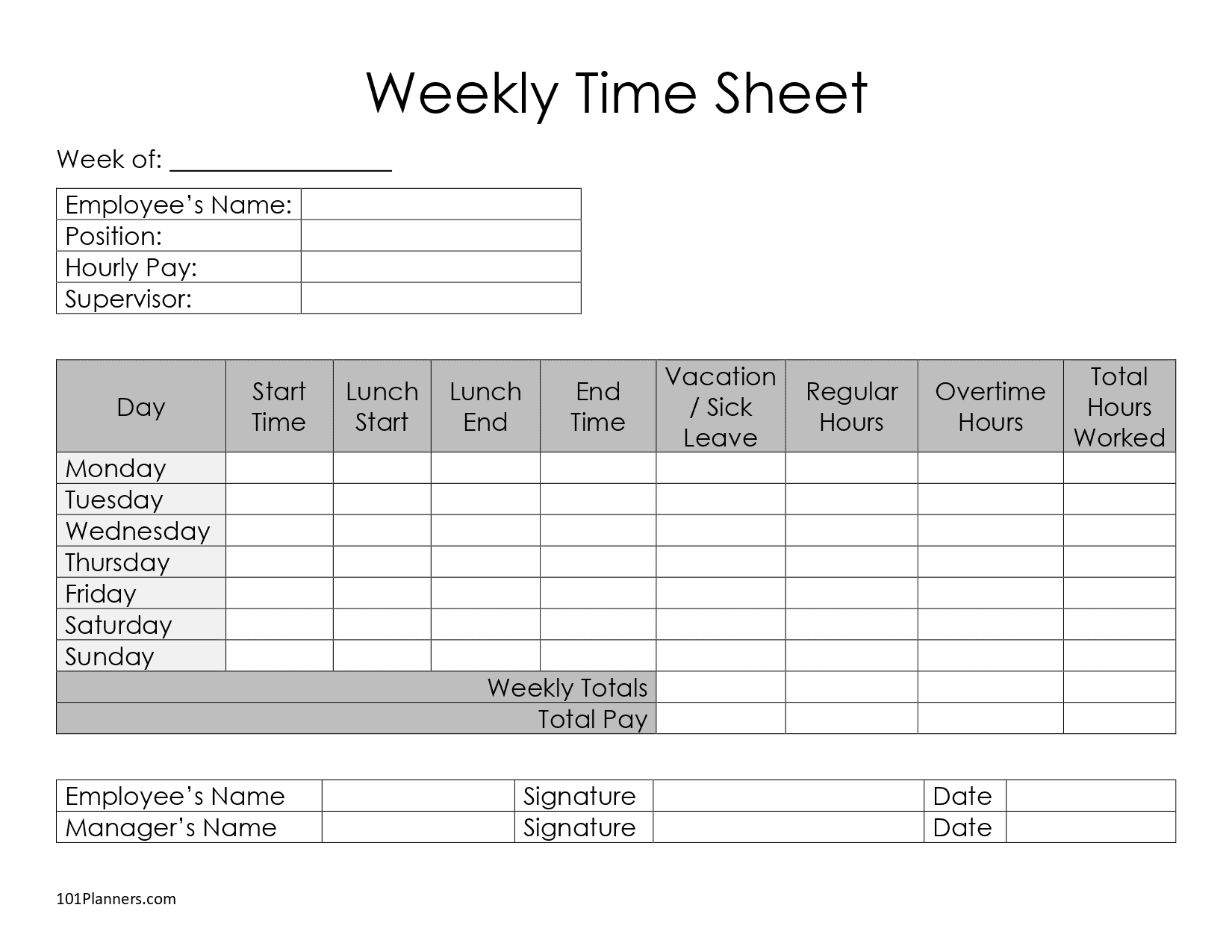
Lunch start lunch end

Google Docs | Google Sheets | Word | Editable PDF | Excel Spreadsheet | Image

This is a weekly time card with break time and vacation and sick days.

One break

Google Docs | Google Sheets | Word | Editable PDF | Excel Spreadsheet | Image

This template tracks the time lunch break started and ended.

Free printable time sheet

Google Docs | Google Sheets | Word | Editable PDF | Excel Spreadsheet | Image

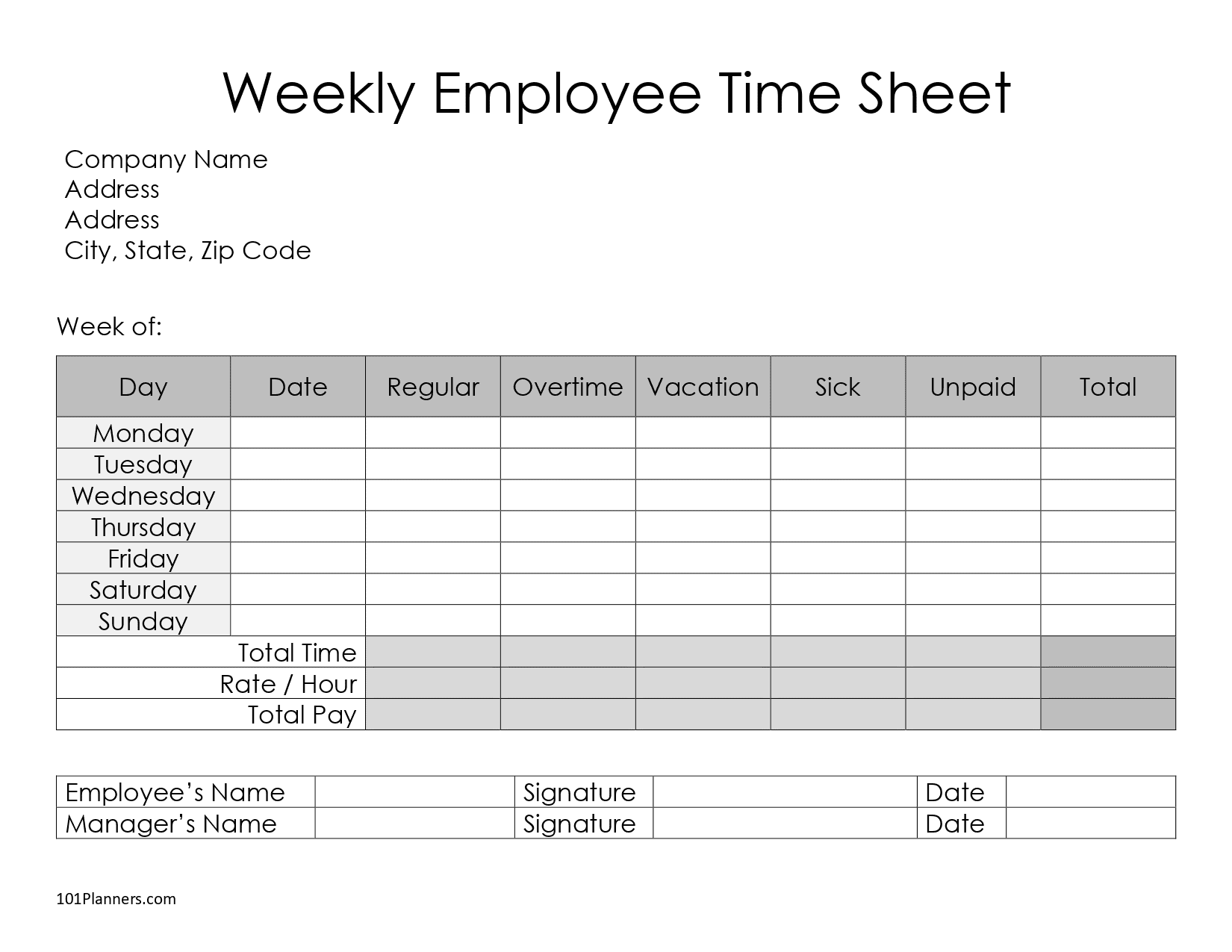
Fields: day, date, regular hours, overtime hours, vacation, sick leave, unpaid leave, and total hours. The template also includes total time, rate per hour, and total pay.

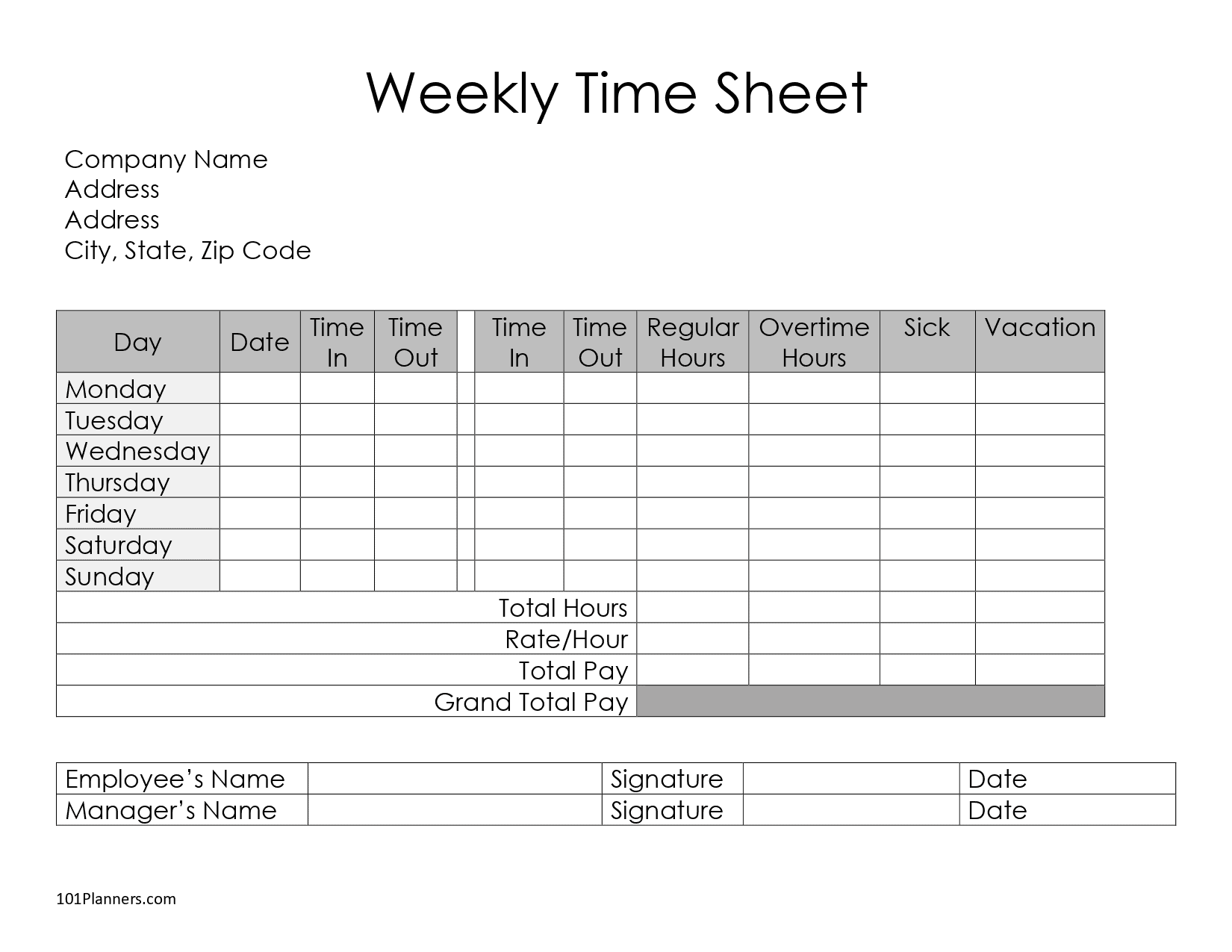
This template includes the time in and time out twice assuming there is a break in the middle. It then divides the total hours into regular hours and overtime. It also includes a section for sick leave and vacation time.

Weekly timesheet

Google Docs | Google Sheets | Word | Editable PDF | Excel Spreadsheet | Image

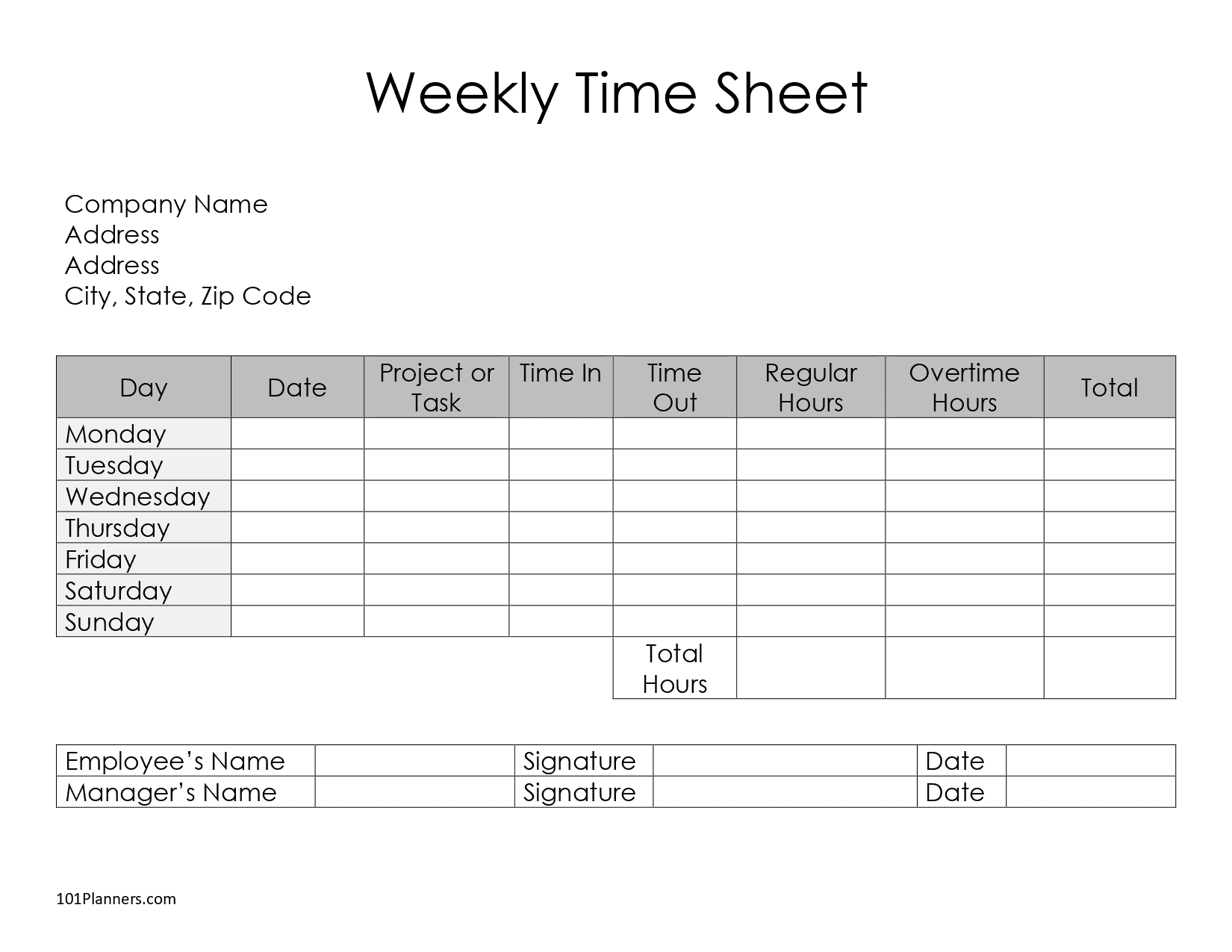
Fields: day, date, project or task, time in, time out, regular hours, overtime hours, and total hours. There is no section to calculate pay but there is a signature section.

Basic Weekly timesheet

Google Docs | Google Sheets | Word | Editable PDF | Excel Spreadsheet | Image

This timesheet records the time in and time out each day. You can add more timesheet details by adding additional columns.

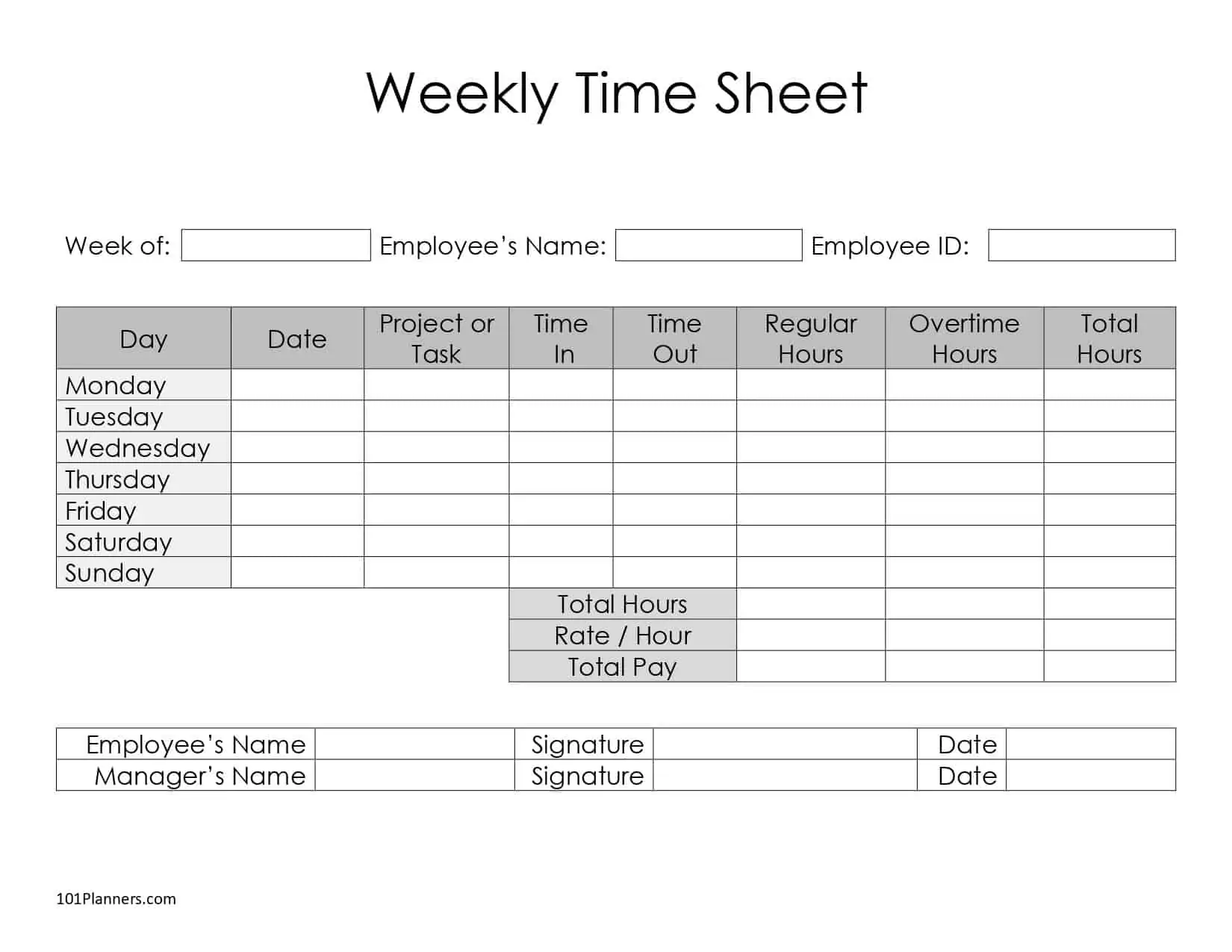
Fields: day, date, project or task, time in, time out, regular hours, overtime hours, total hours, rate per hour, and total pay. There is a signature section.

Deduct lunch

Google Docs | Google Sheets | Word | Editable PDF | Excel Spreadsheet | Image

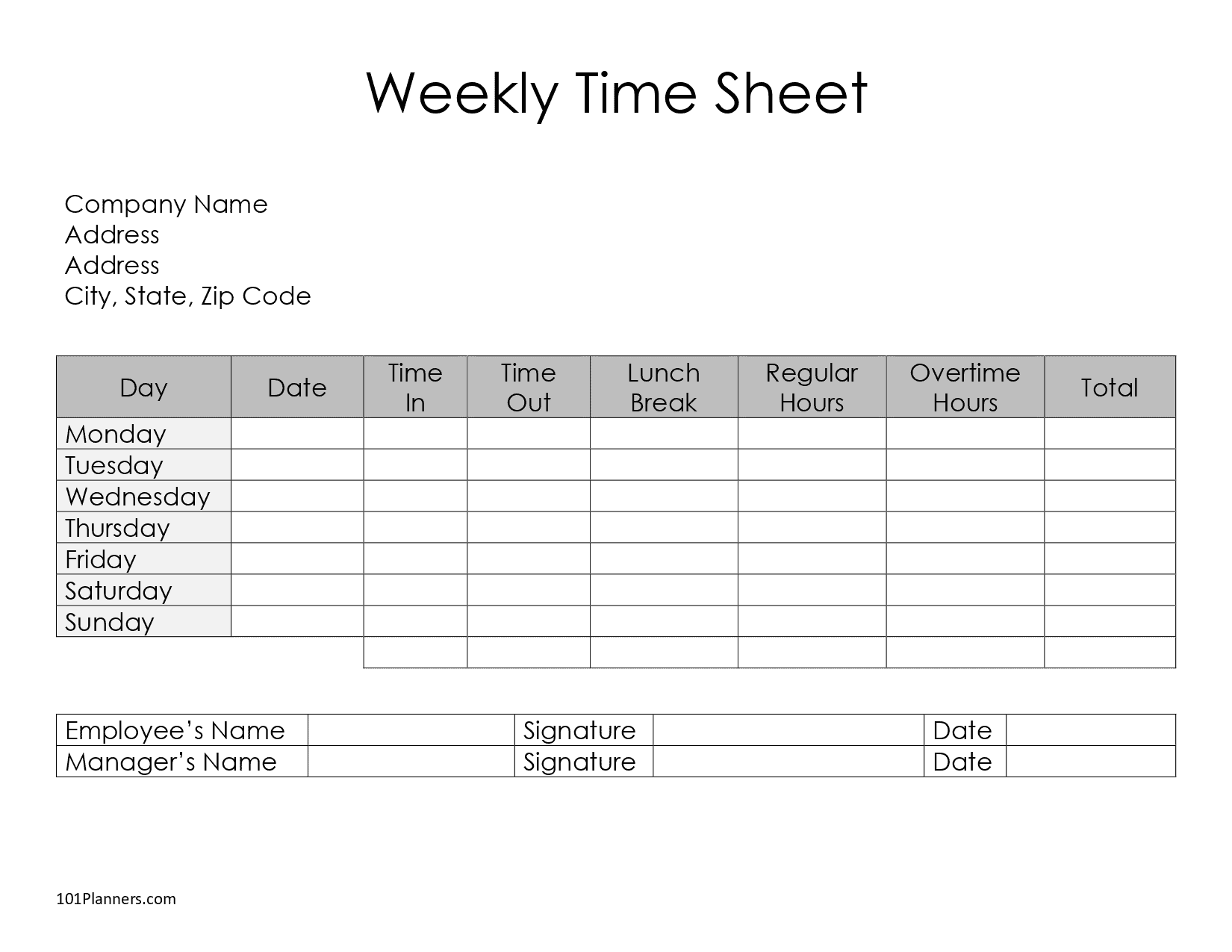
Fields: day, date, time in, time out, lunch break, regular hours, overtime hours, total, signatures.

Bi-Weekly

Biweekly time card

Google Docs | Google Sheets | Word | Editable PDF | Excel Spreadsheet | Image

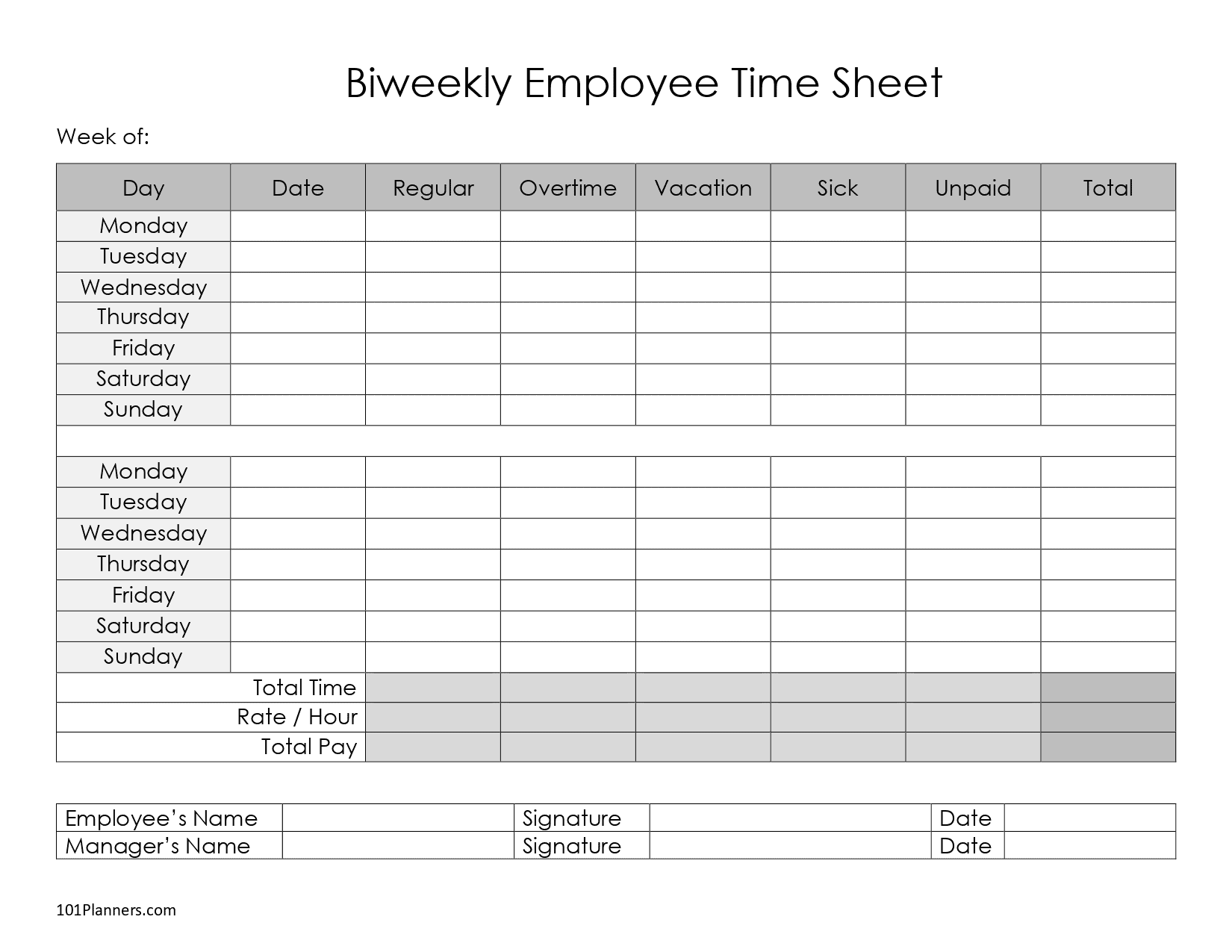
Fields: day, date, regular hours, overtime, vacation, sick leave, unpaid leave, total hours (no breaks). Total time, rate per hour, and total pay. There is also a section for signatures.

Biweekly timesheet with 1 break

Google Docs | Google Sheets | Word | Editable PDF | Excel Spreadsheet | Image

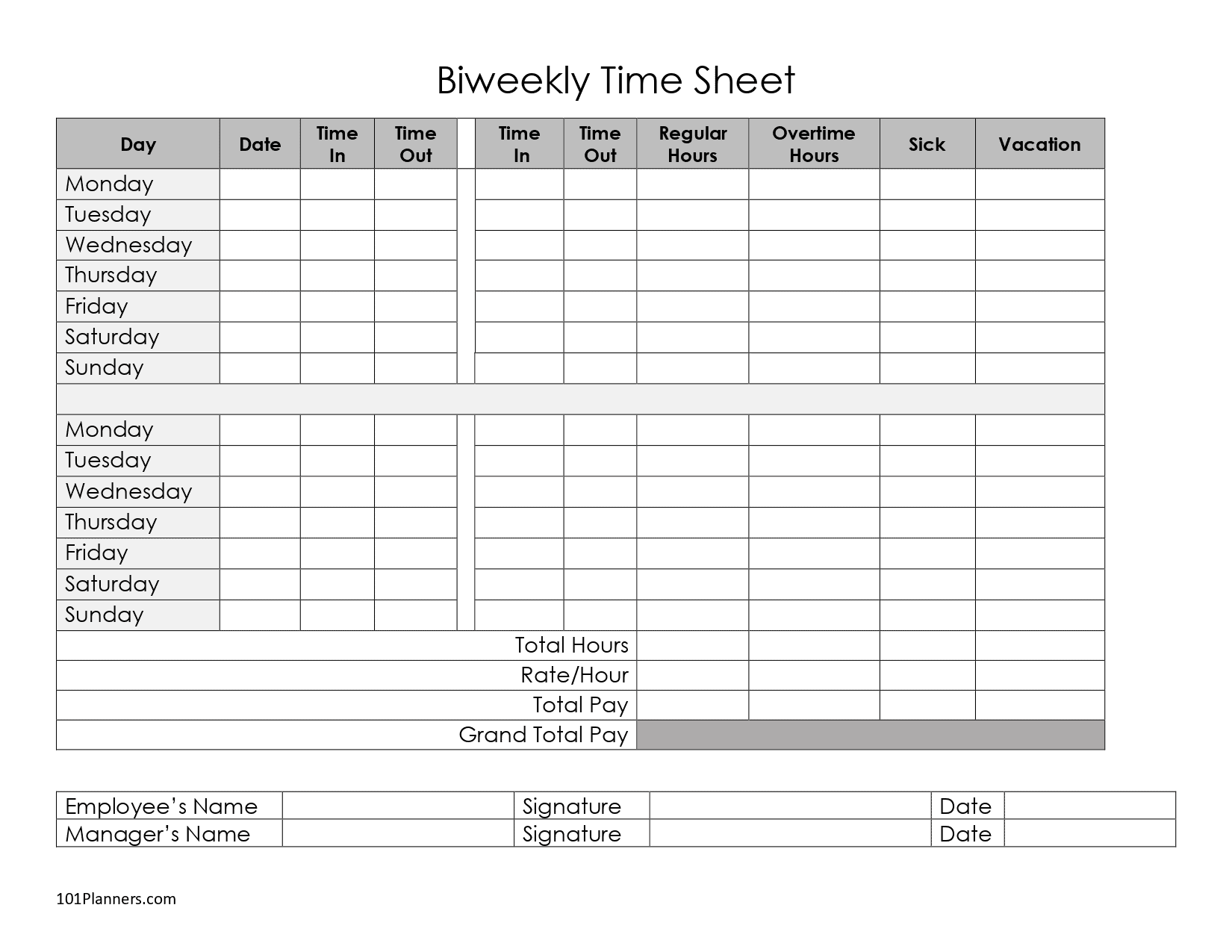
Biweekly timesheet with one break.

Fields: Day, date, time in and time out, time in and time out (after the break), regular hours, overtime, vacation, sick leave. Total time, rate per hour, and total pay. There is also a section for signatures.

Bieekly timesheet - with 2 breaks

Google Docs | Google Sheets | Word | Editable PDF | Excel Spreadsheet | Image

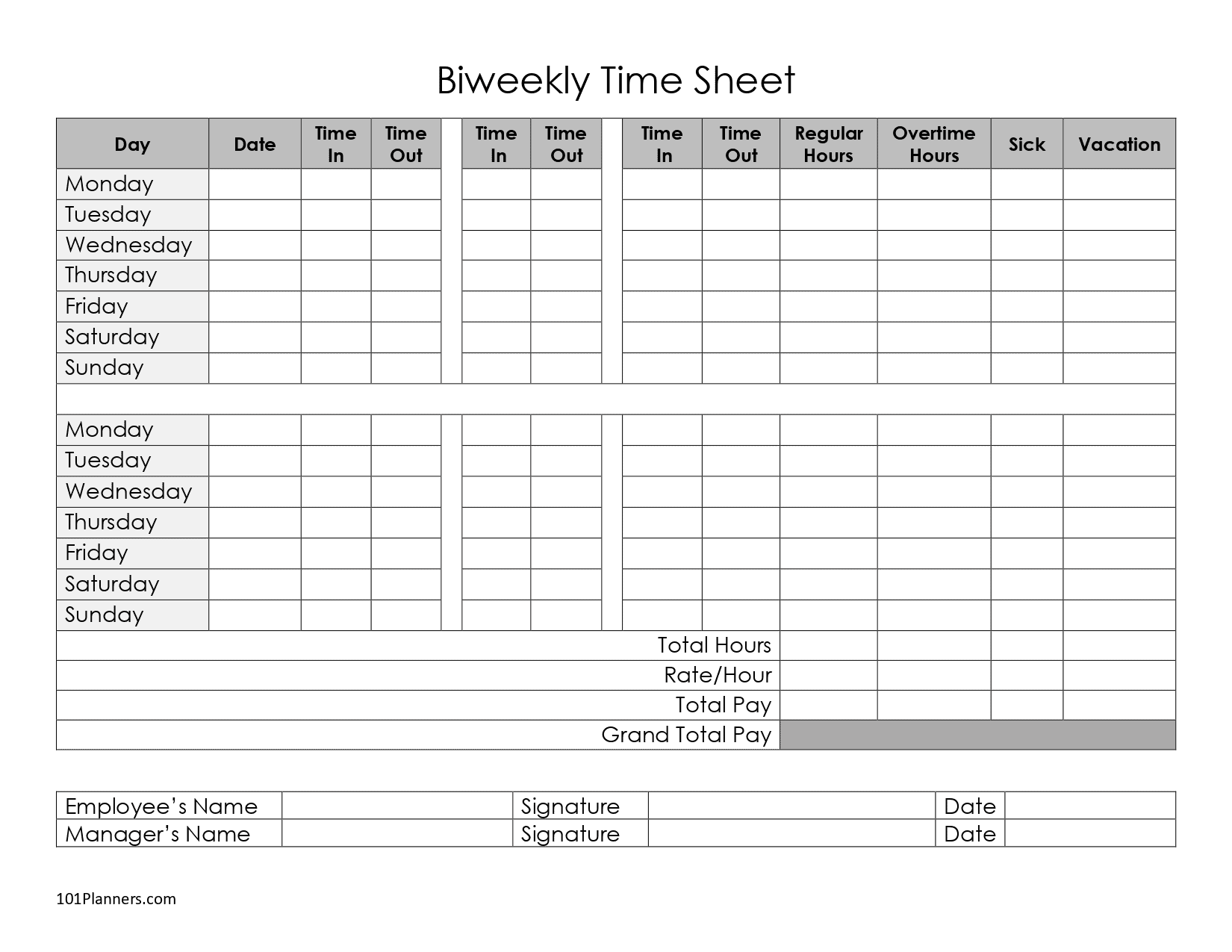
Biweekly with two breaks.

Monthly

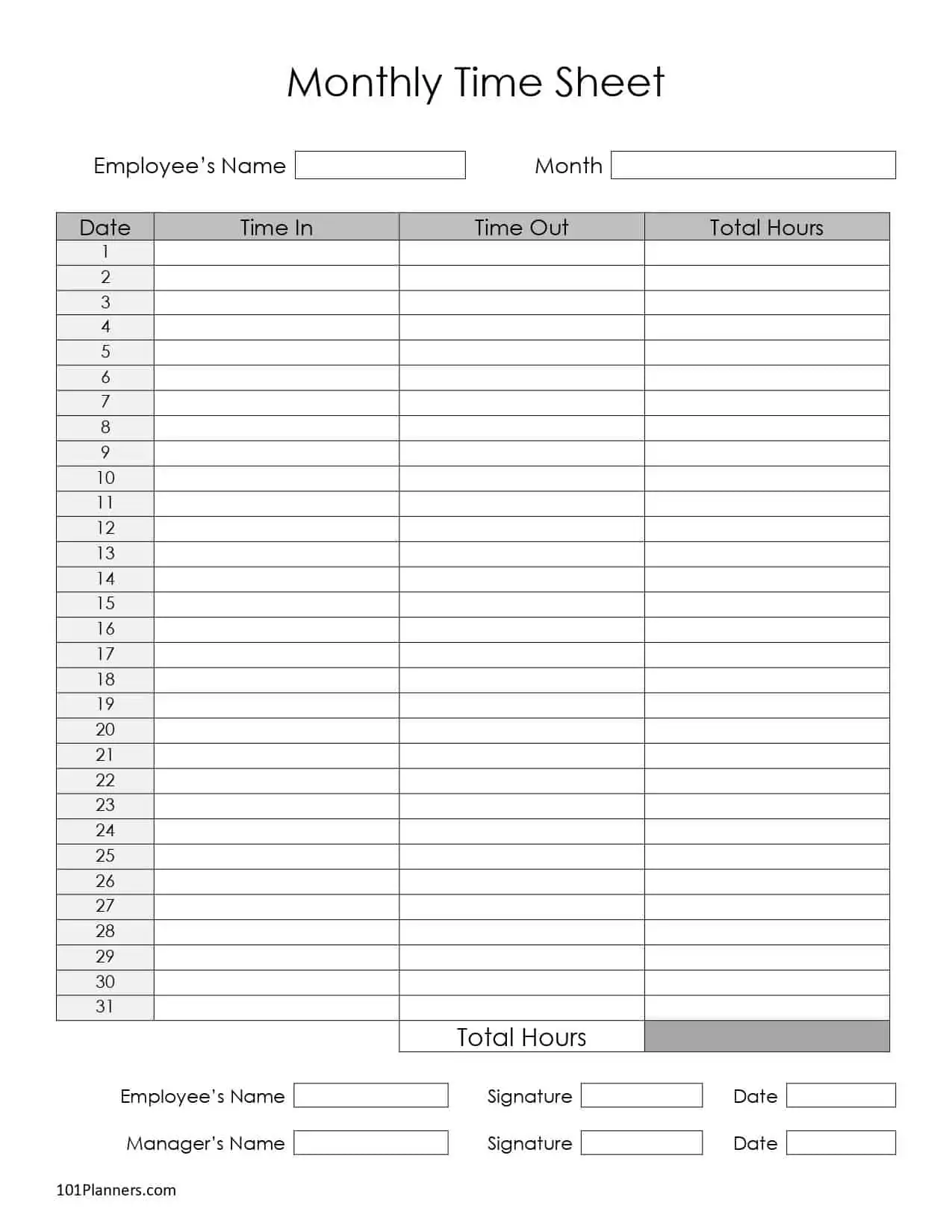
monthly timesheet

Google Docs | Google Sheets | Word | Editable PDF | Excel Spreadsheet | Image

This is a simple monthly timesheet that records the time in, time out, and total hours.

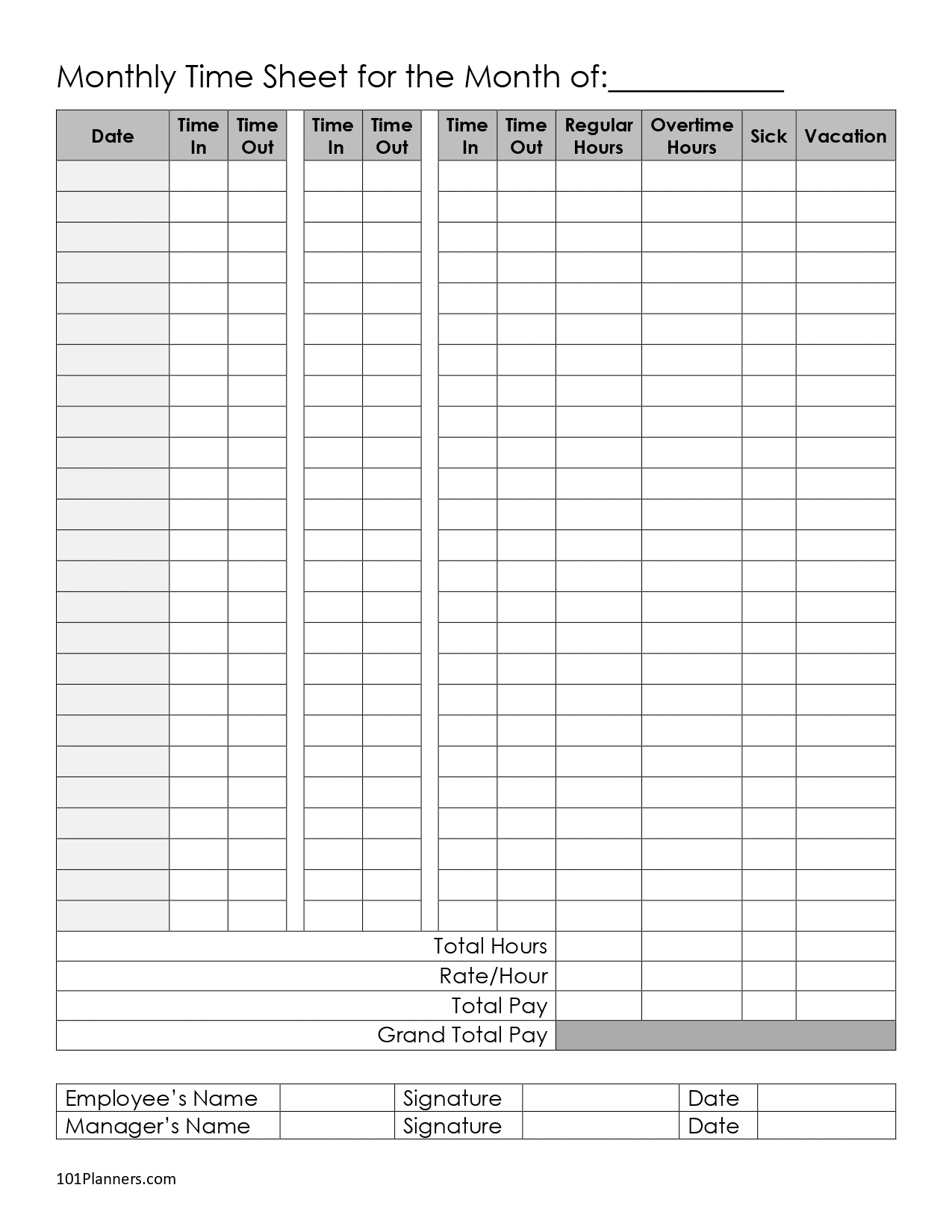
Monthly timesheet with 2 breaks

Google Docs | Google Sheets | Word | Editable PDF | Excel Spreadsheet | Image

Monthly timesheet with up to 2 breaks

Yearly

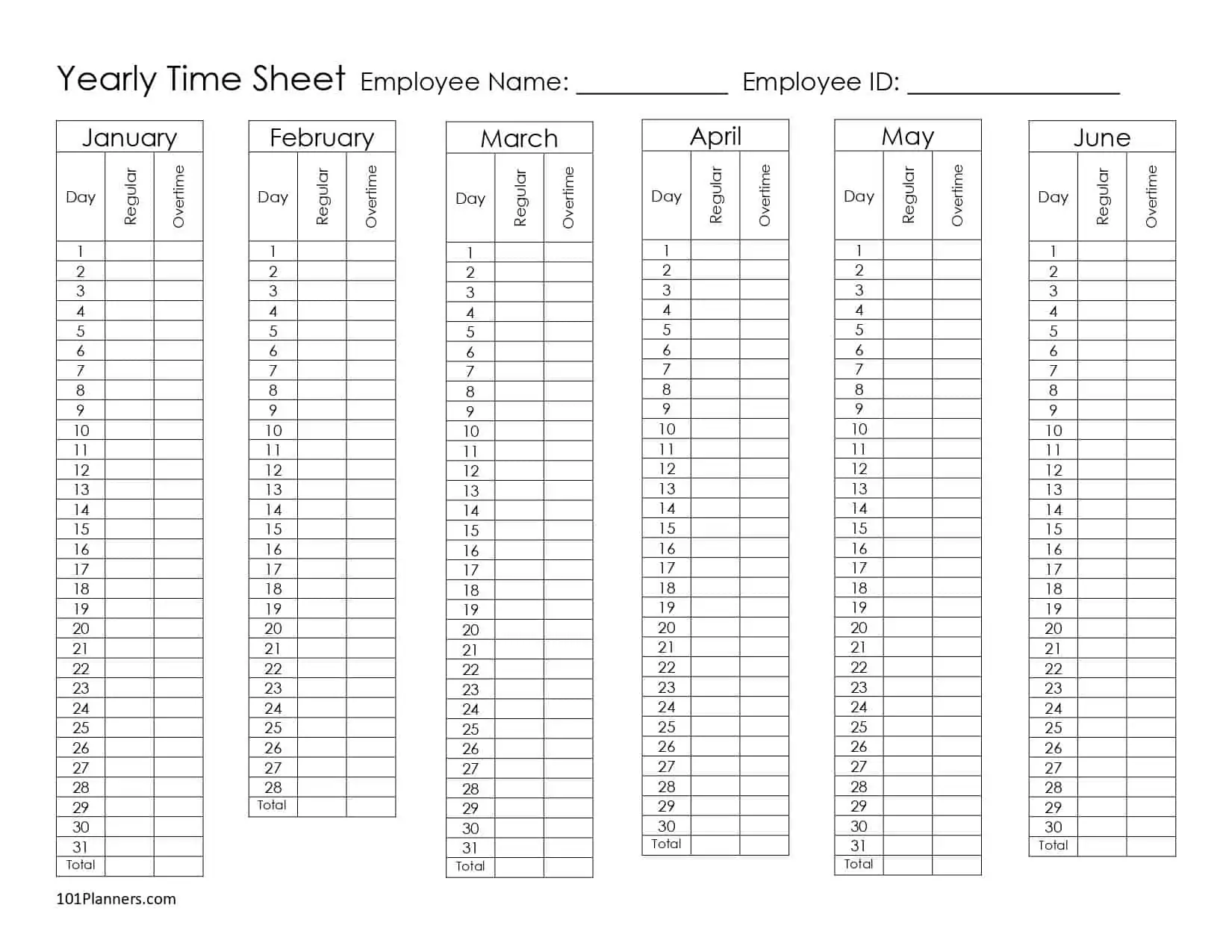
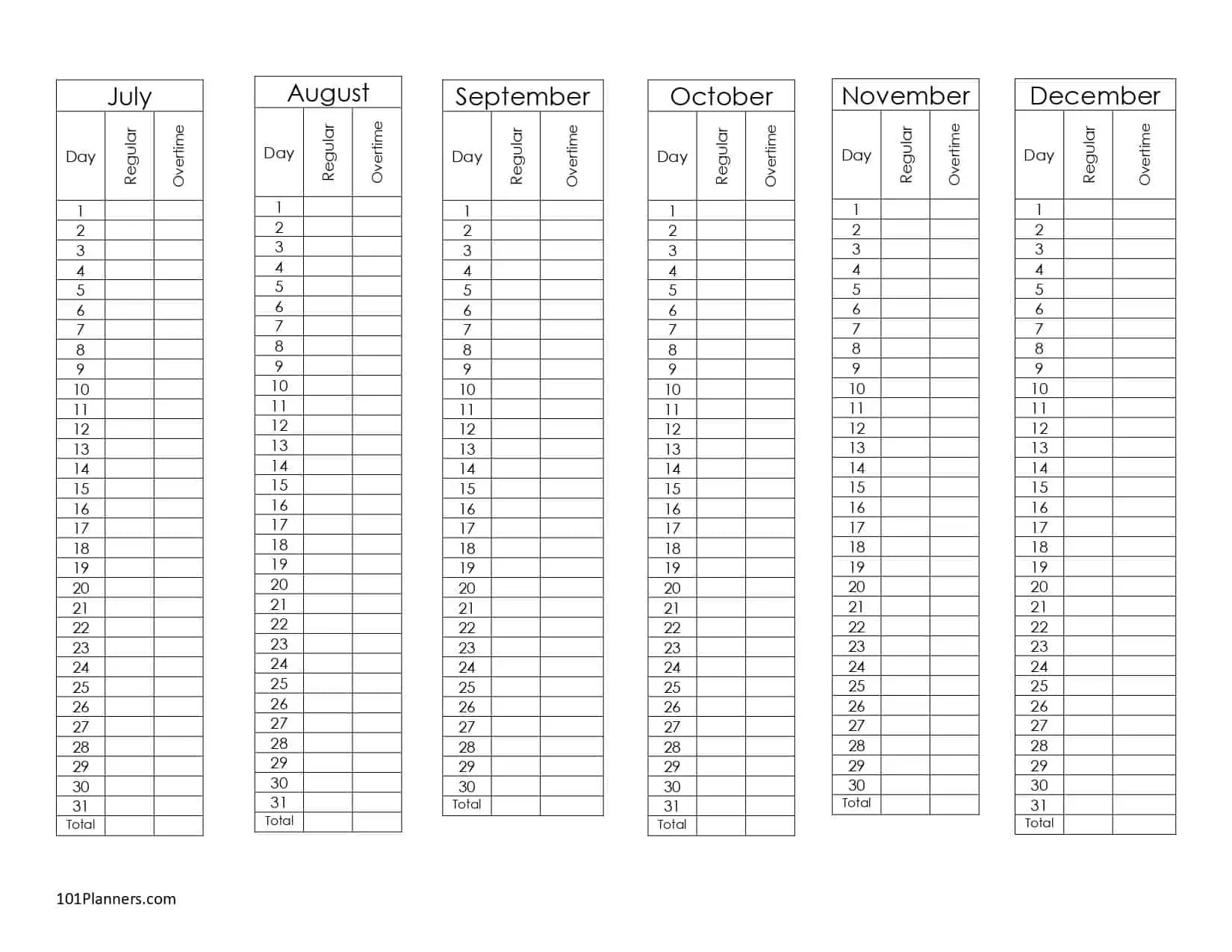
This yearly template can track regular hours, overtime hours, and total hours over an entire year.

January to June

January to June

July to December

July to December

Google Docs | Google Sheets | Word | Editable PDF | Excel Spreadsheet | Image

If you have multiple employees, then keep a sheet for each employee or use a template for multiple employees.

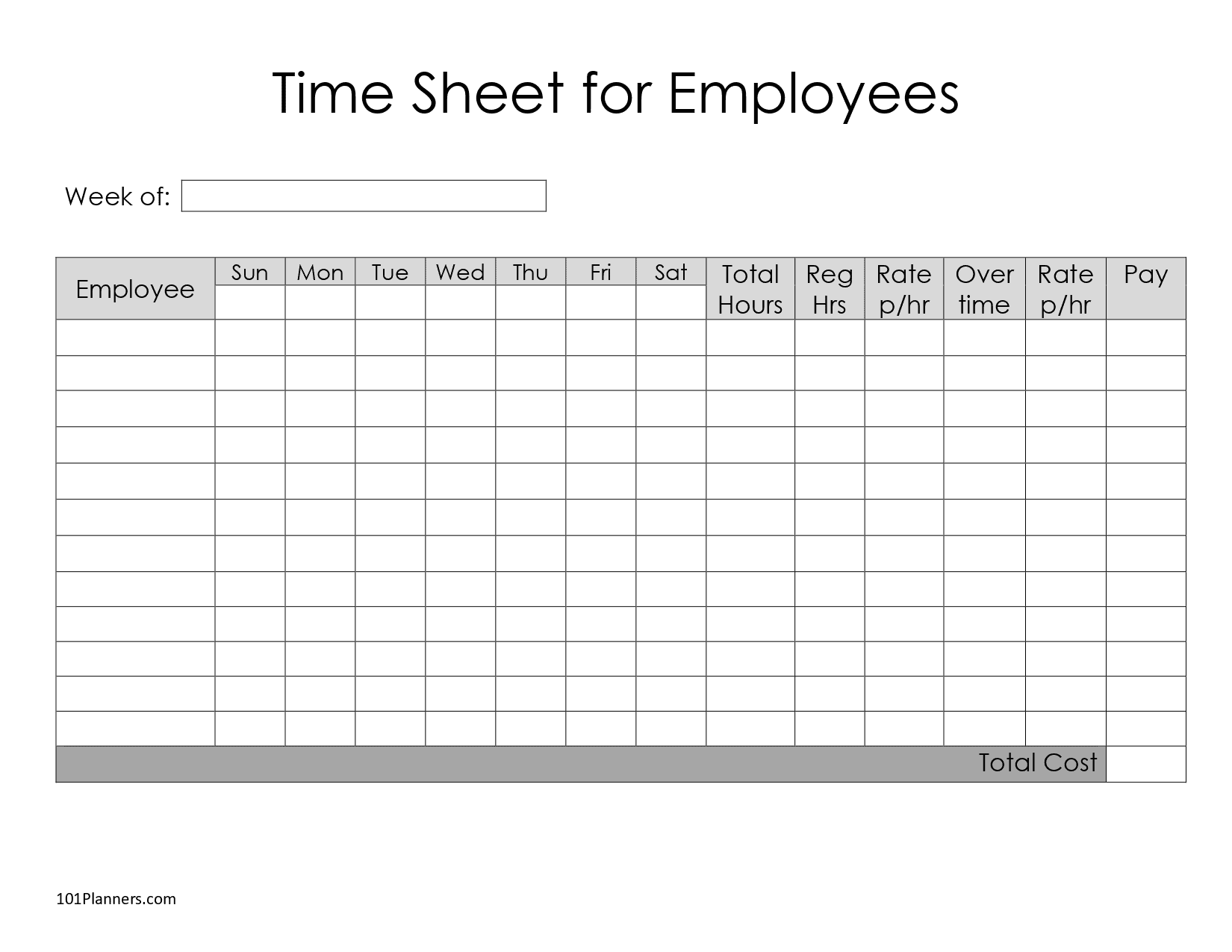
Timesheet for multiple employees

Google Docs | Google Sheets | Word | Editable PDF | Excel Spreadsheet | Image

Fields: Employee’s name or ID, days of the week, total hours, regular hours, rate per hour, overtime, rate per hour and pay.

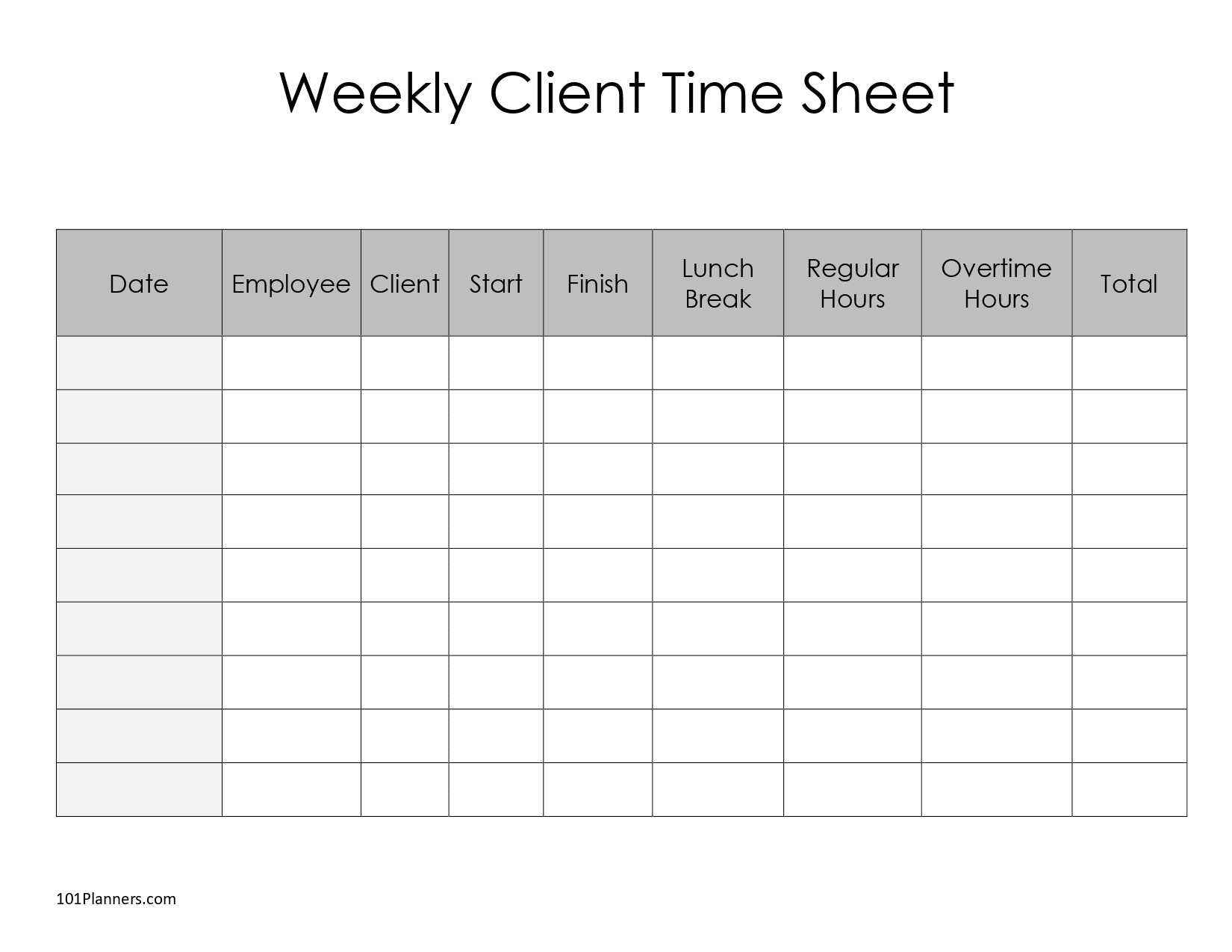
Client Timesheet

client timesheet

Google Docs | Google Sheets | Word | Editable PDF | Excel Spreadsheet | Image

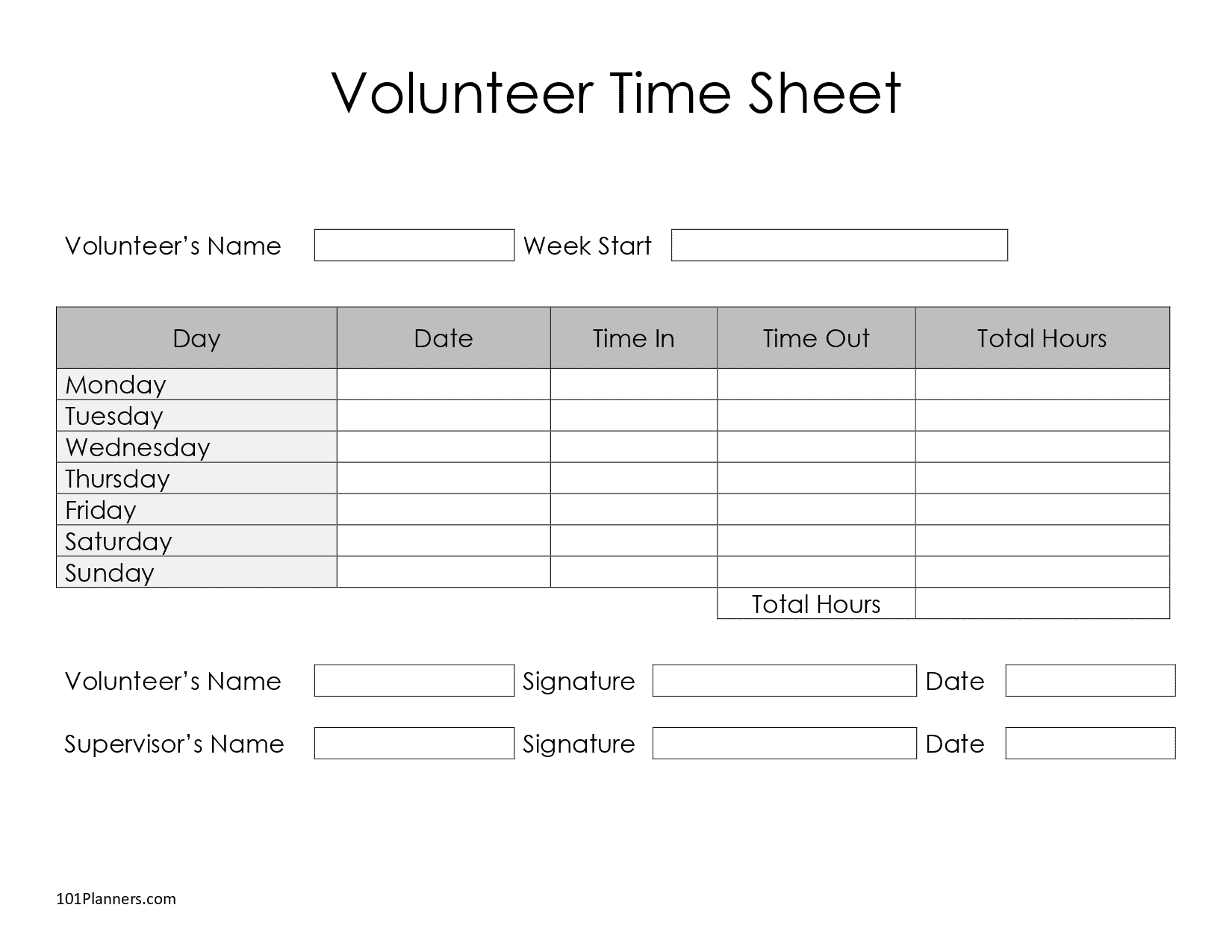
Volunteer Timesheet

Weekly
Volunteer timesheet

Google Docs | Google Sheets | Word | Editable PDF | Excel Spreadsheet | Image

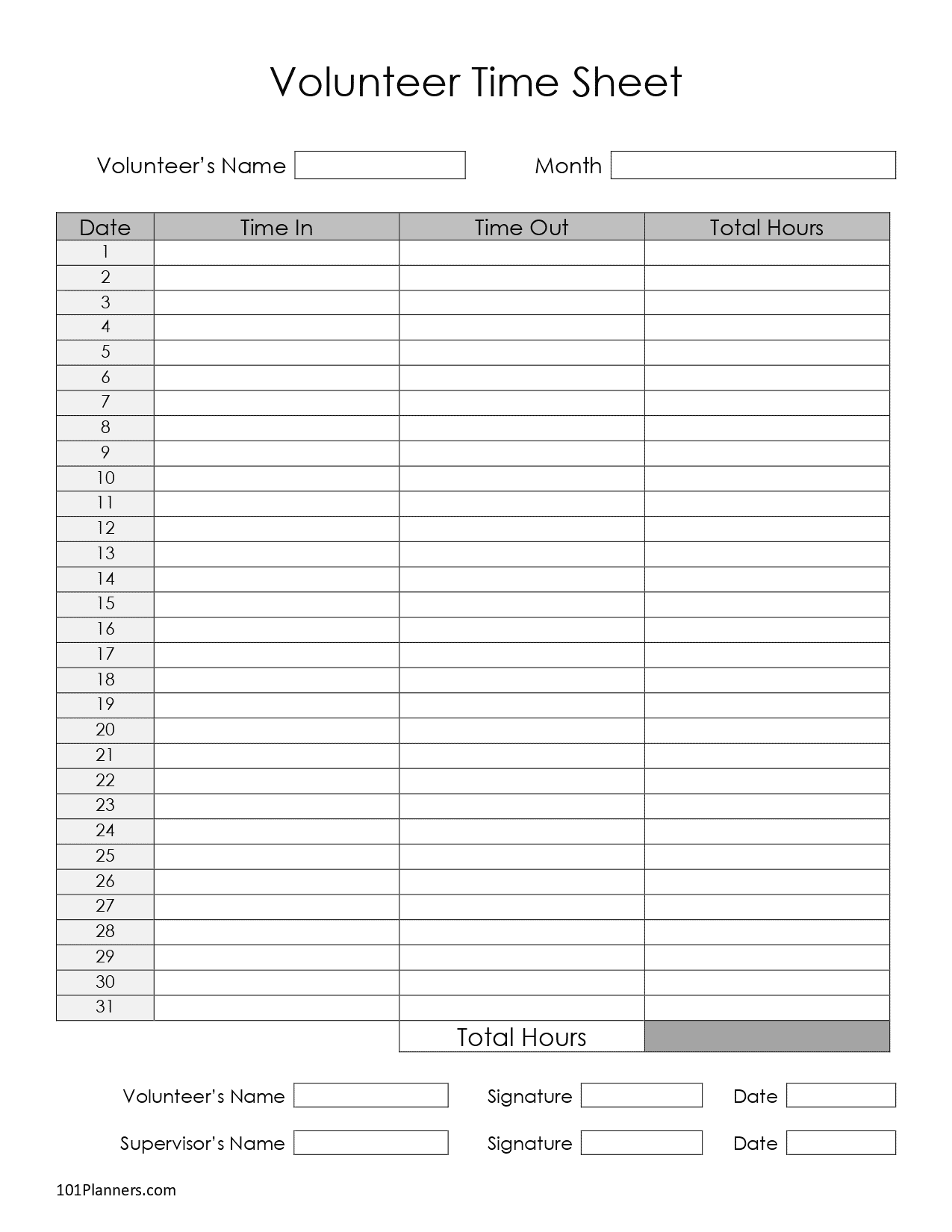
Monthly
volunteer monthly timesheet

Google Docs | Google Sheets | Word | Editable PDF | Excel Spreadsheet | Image


Time Sheets with Times Clocked In

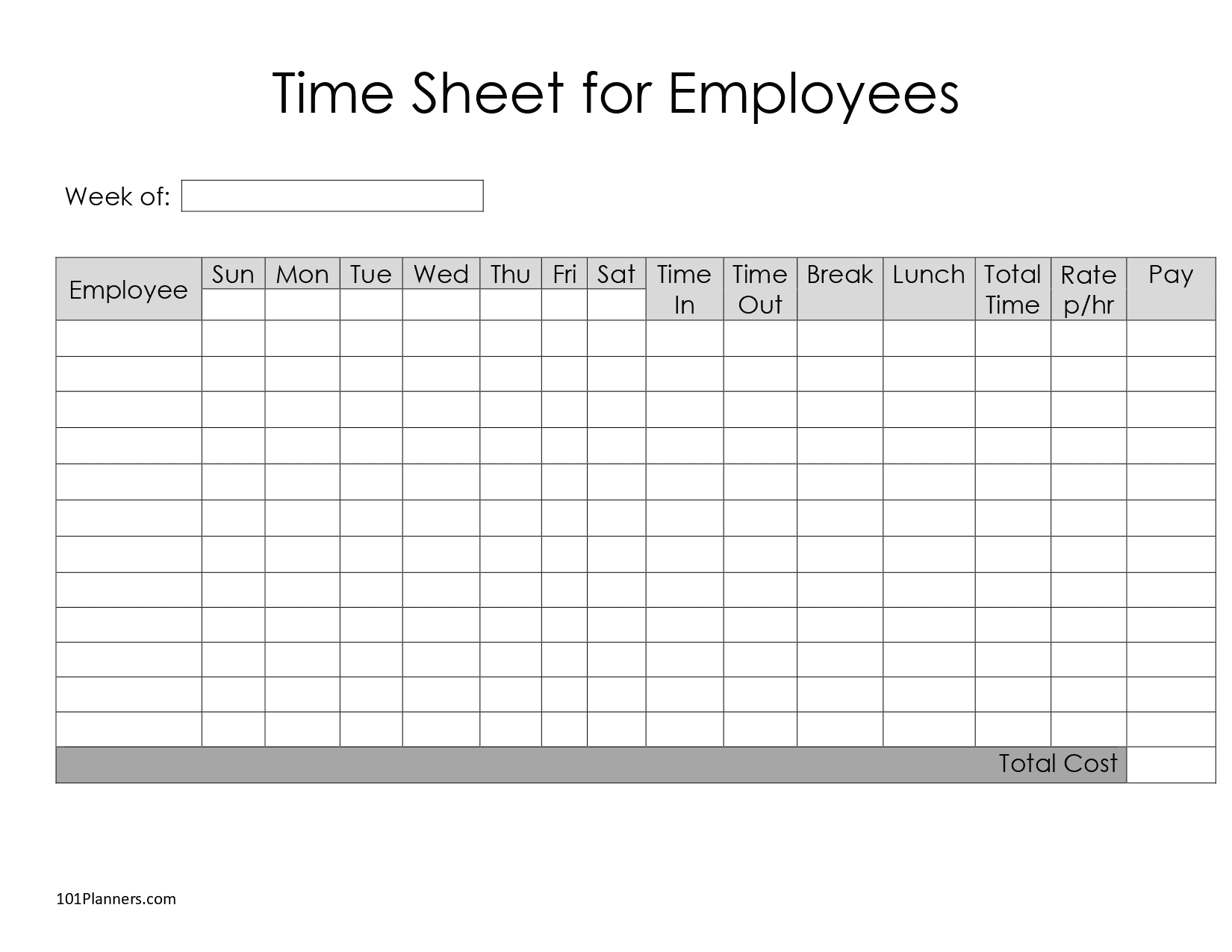
Timesheet for multiple employees with time in and time out

Google Docs | Google Sheets | Word | Editable PDF | Excel Spreadsheet | Image

Fields: employees name or ID, days of the week, time in, time out, break, lunch, total hours, rate per hour and pay.

Monthly timesheet with 2 breaks

Google Docs | Google Sheets | Word | Editable PDF | Excel Spreadsheet | Image

Monthly timesheet with up to two breaks.

Project-Based Time Cards

Weekly

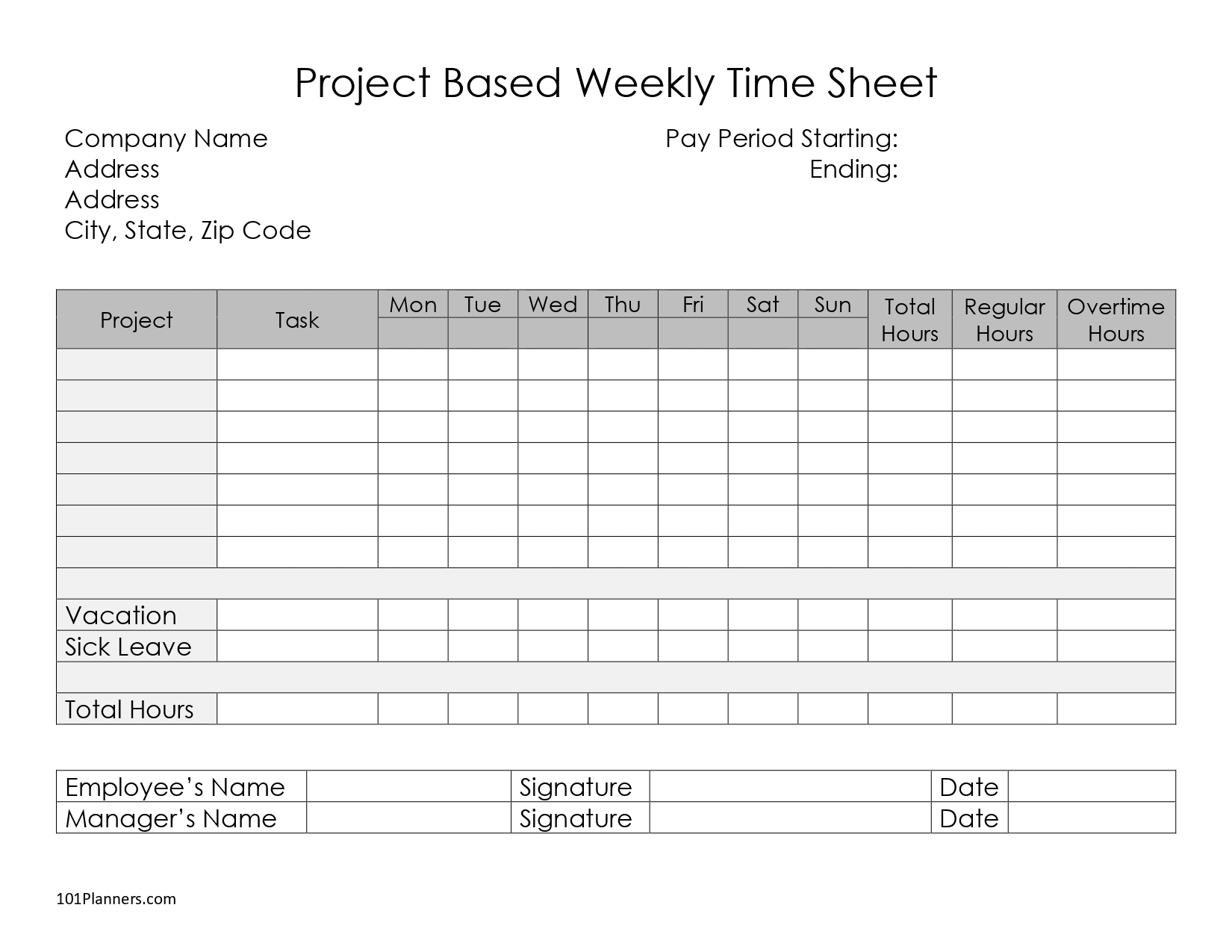
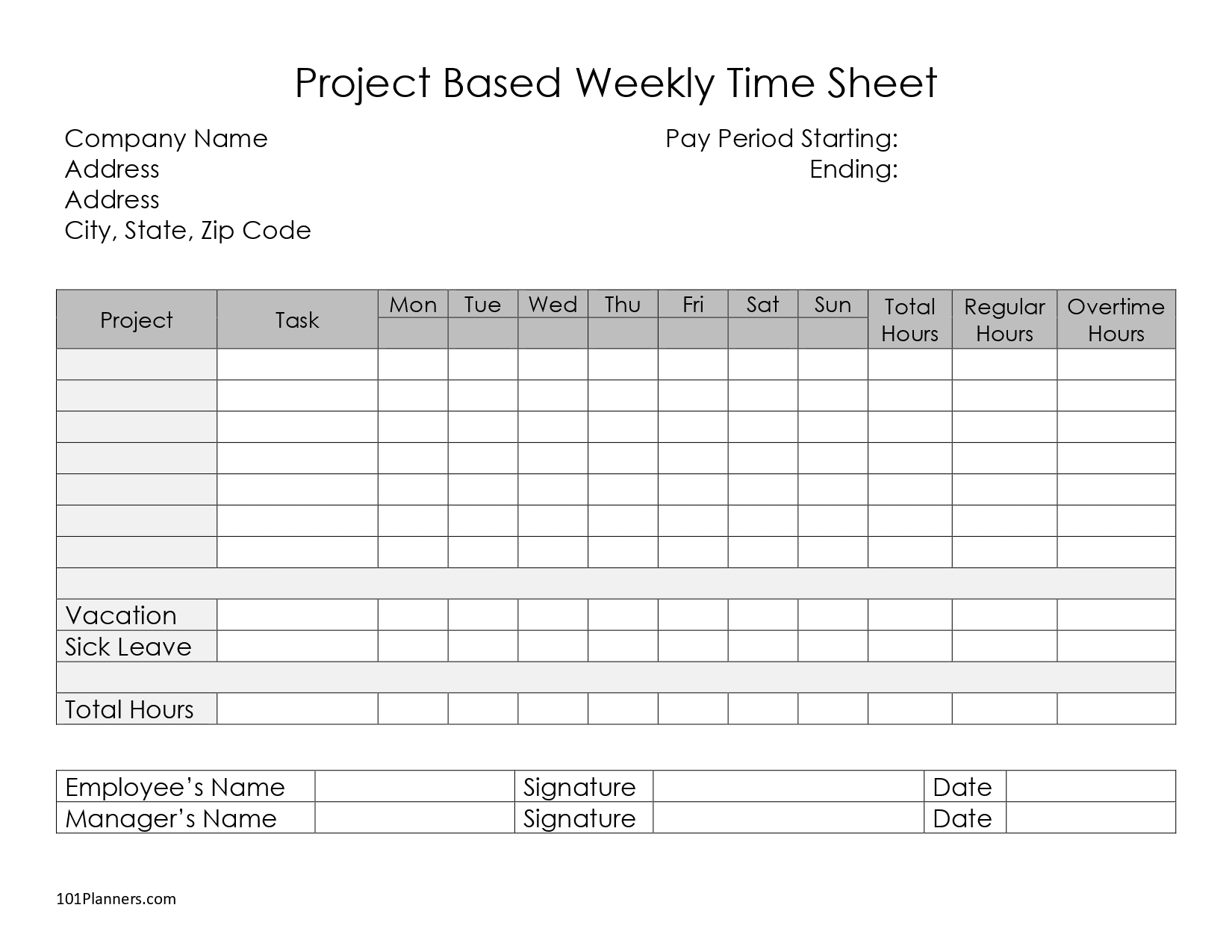
Project Based Weekly Timesheet

Google Docs | Google Sheets | Word | Editable PDF | Excel Spreadsheet | Image

Project based weekly timesheet

Google Docs | Google Sheets | Word | Editable PDF | Excel Spreadsheet | Image

This timesheet template has a section for your company’s details. Either fill it out or delete it.

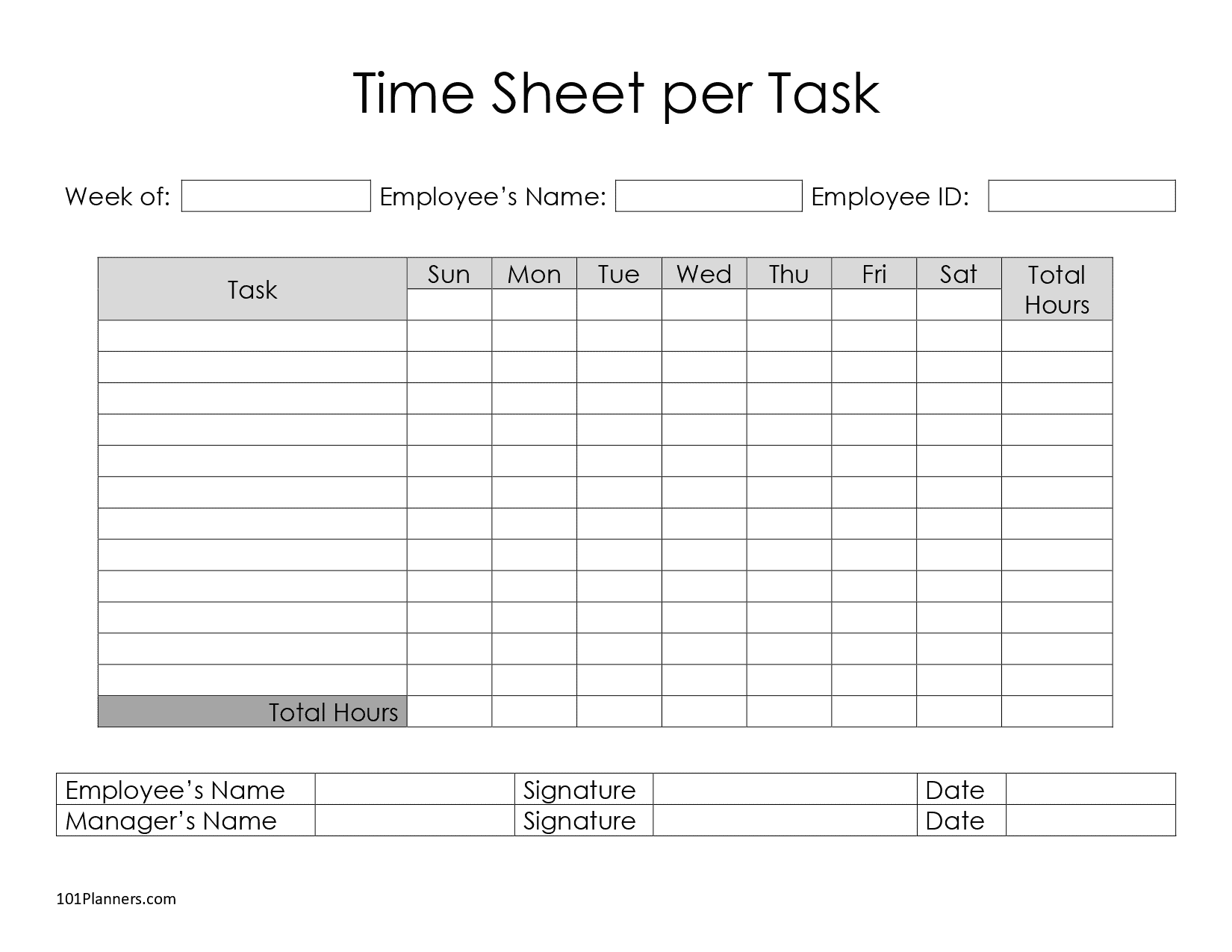
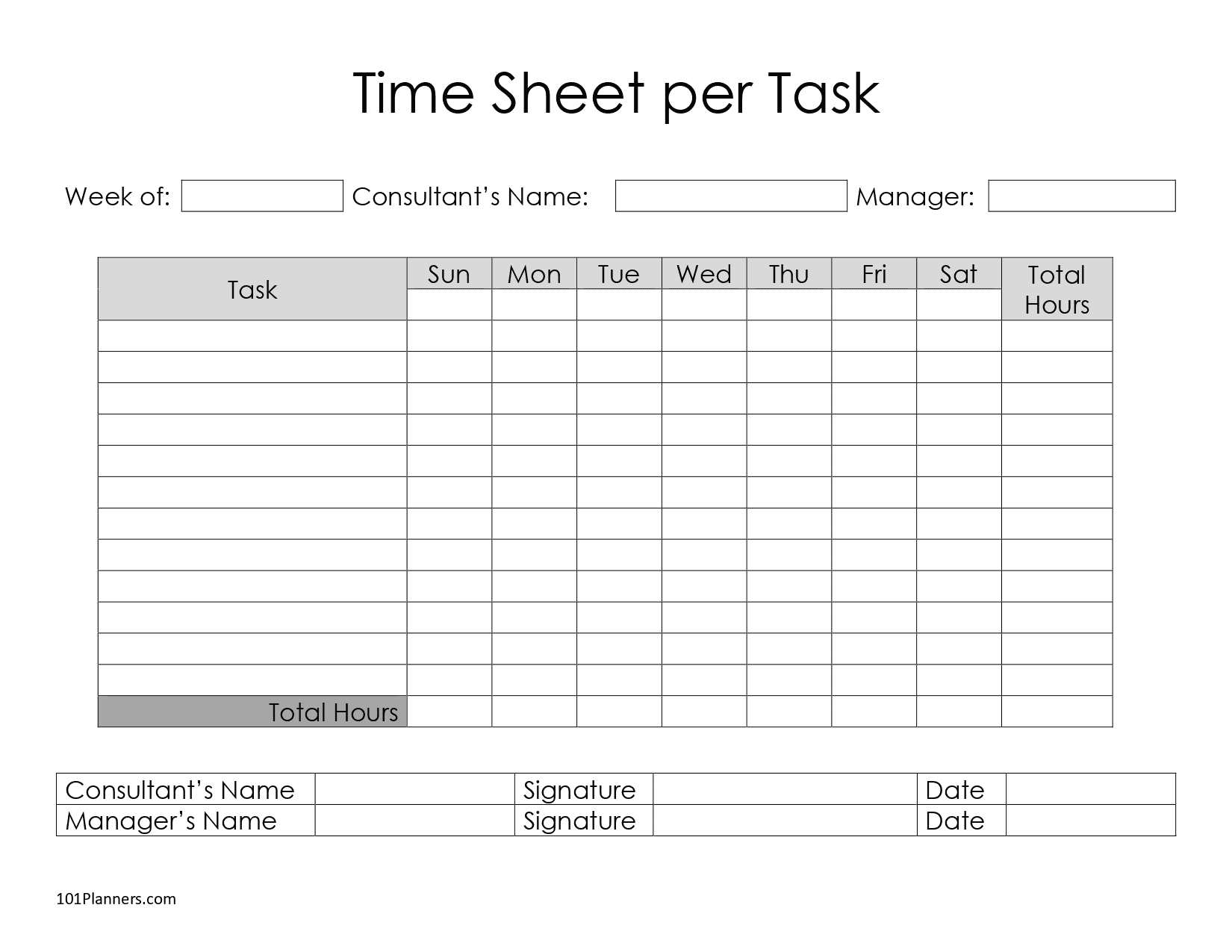
Timesheet per task

Google Docs | Google Sheets | Word | Editable PDF | Excel Spreadsheet | Image

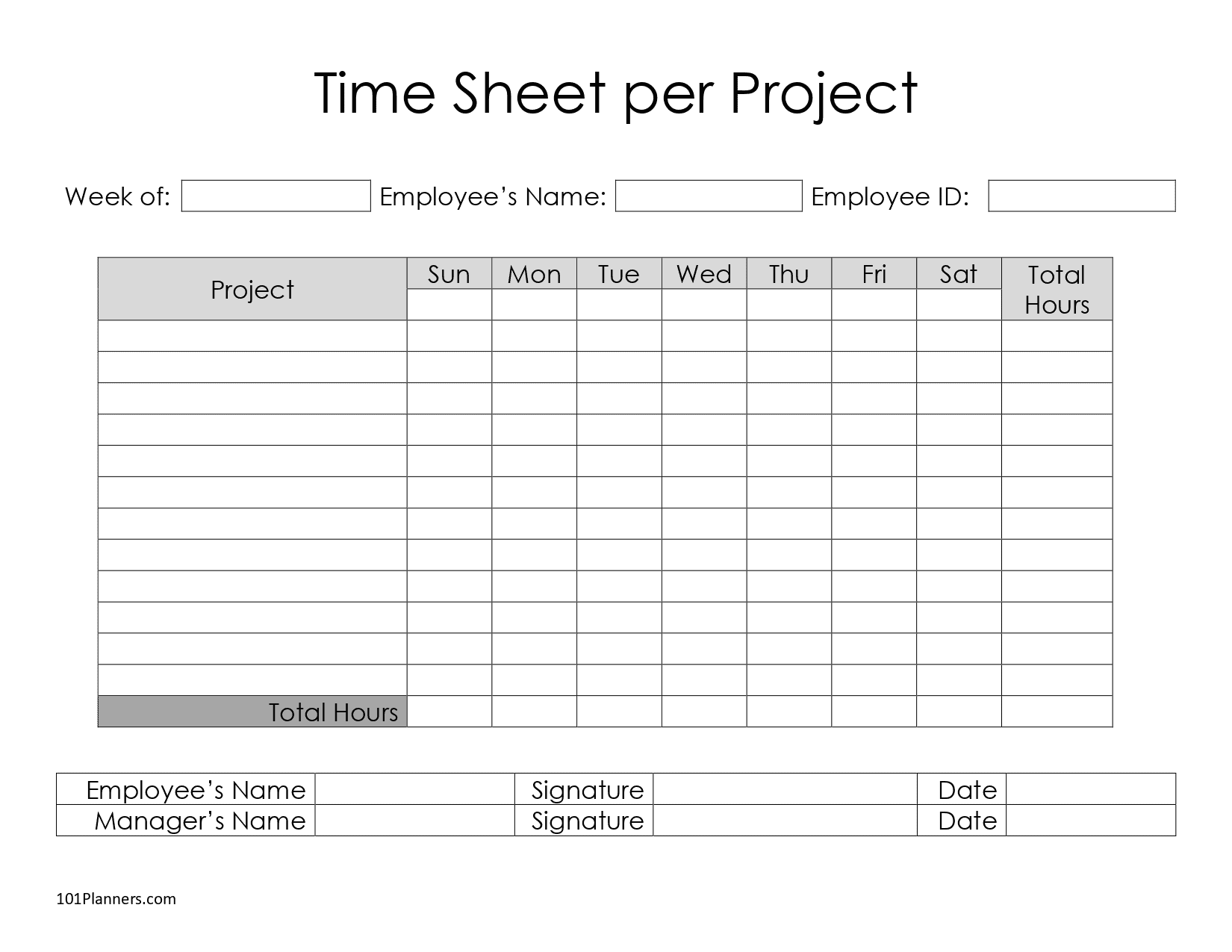
Timesheet per project

Google Docs | Google Sheets | Word | Editable PDF | Excel Spreadsheet | Image

Biweekly

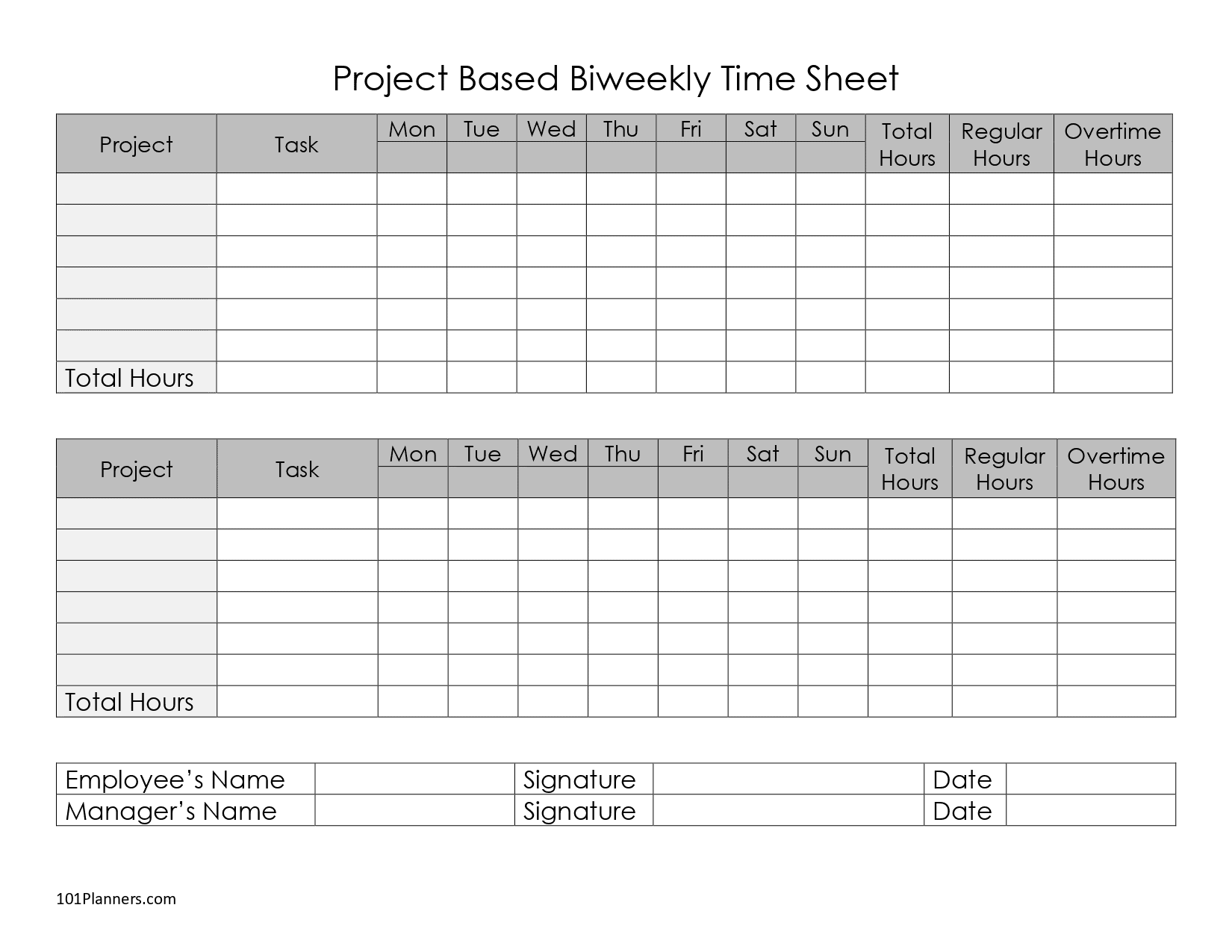
Project Base Biweekly

Google Docs | Google Sheets | Word | Editable PDF | Excel Spreadsheet | Image

This timesheet template distinguishes between the project and the task you worked on each day.

Consultant

consultant

Google Docs | Google Sheets | Word | Editable PDF | Excel Spreadsheet | Image

This is a time card for a consultant to track the time spent on each task or project.


We offer a large selection of free printable timesheets. Select a template with a time sheet format that best suits your needs.

We offer our free printable timesheets in Excel, Google Sheets, MS Word, Google Docs, typeable PDFs, and an image. You can use a printed timesheet, a digital timesheet (an online form), or a spreadsheet. The advantage of a spreadsheet is that it can calculate totals automatically. It can also divide total hours into regular hours and overtime and then calculate the number of hours by the hourly rate to get the total sum that should be paid to each employee.

Create a free timesheet template that you can customize to suit your needs. Add a logo and/or edit the text. There are 28 formats available in Excel, Google Sheets, MS Word, Google Docs, typeable PDF, and an image. Instant download.
What to put on a timesheet

A timesheet only needs to do two things well: record when work happened and make the total easy to check. Everything else is optional, and the maker lets you switch each piece on or off. The columns worth considering:

  • Date and day โ€” so every row is anchored to a real day in the pay period.
  • Time in and time out โ€” the clock-in and clock-out times for each day. The maker turns these into hours for you.
  • Break or lunch โ€” unpaid minutes to subtract from the day’s total.
  • Total hours โ€” calculated from the in/out times, or typed directly if you’d rather just enter a number.
  • Overtime โ€” hours past a threshold you set, kept in their own column.
  • Hourly rate and pay โ€” multiply hours by a rate to get gross pay per period.
  • Project or client โ€” useful if you bill time or split it across jobs.
  • Notes โ€” anything a reviewer should know.

If you’re not sure, start with date, time in, time out, break, and total hours. That’s the honest core of a time sheet template, and you can add the rest in a click.

Pick the pay period that matches your payroll

The single most useful choice is how often you’re paid, because it sets how many rows the sheet needs and how the totals group together.

Weekly timesheet

Seven days, one total. A weekly timesheet is the most common format and the easiest to reconcile, which is why I made it the default. It suits hourly staff, part-timers, and anyone submitting hours every Friday.

Biweekly timesheet

Fourteen days across two week-blocks. A biweekly timesheet is what most salaried-plus-hourly workplaces run on, and it’s the format where overtime gets tricky โ€” overtime is almost always calculated per week, not across the whole fortnight. The maker keeps each week’s subtotal separate so the numbers stay correct, then gives you a grand total at the bottom.

Semi-monthly timesheet

Two fixed pay dates a month, usually the 1stโ€“15th and the 16thโ€“end. Semi-monthly looks like biweekly but isn’t: the periods have different lengths and don’t line up with calendar weeks, so it needs its own layout. Pick this one only if your paydays are date-based rather than every-two-weeks.

Monthly timesheet

A full month on one sheet. A monthly timesheet works well for salaried staff, contractors on a monthly invoice, or anyone who just needs a tidy record rather than a payroll-grade breakdown. Choose a start date and the maker fills in every day of that month for you.

Daily timesheet

A single day, often broken into tasks or shifts. A daily timesheet is handy for detailed job costing, split shifts, or tracking exactly where a day went.

Choose your format: Excel, Word, PDF, or Google Sheets

This is where a lot of templates fall down โ€” they give you one file type and that’s it. The maker exports four, and each is a real file, not a screenshot.

Excel

The Excel download keeps its formulas. The hours, overtime split, and pay all recalculate the moment you change a time, because the cells contain live formulas rather than baked-in numbers. Time in and time out are stored as real Excel times, the daily total uses a formula that handles overnight shifts, and multi-week sheets carry weekly subtotals plus a grand total. If you live in spreadsheets, this is the one to grab.

Word

The Word document is fully editable in Microsoft Word, Google Docs, or any word processor. It’s the right pick when you want to tweak wording, drop in a letterhead, or hand a partly-filled sheet to someone who doesn’t use Excel.

PDF

The PDF is the print-and-go option. It looks the same on every device, prints cleanly, and works perfectly as a blank timesheet โ€” leave the hours empty, print a stack, and fill them in by hand. It’s also the tidiest thing to email to a manager for approval.

Google Sheets

Choose the Google Sheets option and the maker copies the timesheet to your clipboard; open a blank sheet and paste. You get an editable, shareable sheet in Drive without any add-ons or permissions.

Whichever you pick, the download is plain black-and-white so it prints well and photocopies cleanly.

How to calculate hours worked

If you’re doing this by hand, the part that trips people up is that time isn’t decimal. Someone who works 9:00 to 5:30 with no break did 8 hours and 30 minutes โ€” but payroll wants that as 8.5, not 8.30.

The method is simple once you see it: take the minutes and divide by 60. Thirty minutes is 30 รท 60 = 0.5, so 8 hours 30 minutes becomes 8.5. Fifteen minutes is 0.25, forty-five minutes is 0.75, ten minutes is about 0.17. Add up each day’s decimal hours and you have the period total. If there’s an unpaid lunch, subtract it before converting.

The maker does all of this automatically and lets you display totals either way โ€” as decimals (8.5) for payroll or as hours and minutes (8:30) for readability. If you ever want to sanity-check the math yourself, that divide-by-60 rule is all you need.

Overtime, breaks, and rounding

Overtime

In the United States, overtime is set by the Fair Labor Standards Act, administered by the U.S. Department of Labor: most hourly employees earn at least one and a half times their regular rate for hours worked beyond 40 in a workweek. That’s the rule the maker uses by default โ€” anything past 40 in a week lands in the overtime column at 1.5ร—.

Some states go further. California, for example, also applies daily overtime after 8 hours in a single day. The maker lets you switch between overtime after 40 hours a week, overtime after 8 hours a day, or both together, and you can change the multiplier if your workplace pays double-time. If none of that applies to you, turn overtime off entirely. When in doubt about your own obligations, your state labor department is the authority to check.

Breaks

If a lunch break is unpaid, it shouldn’t count toward hours worked. Switch on the break column and enter the minutes; the maker subtracts them from that day’s total before it calculates pay. Paid breaks, by contrast, just stay inside the clocked time and need no separate column.

Rounding

Some payrolls round each entry to a set increment. The two most common are the quarter hour (nearest 15 minutes) and the tenth of an hour (nearest 6 minutes). The maker offers both, plus round-up and round-down options, and applies the rule consistently to every day so your totals are defensible. Left on “exact,” it keeps every minute.

Timesheets for employees, freelancers, and yourself

Employees

For an employee timesheet, the maker adds fields for the employee name, manager or approver, and signature lines, and defaults to weekly overtime tracking. It’s built to be filled in, approved, and filed.

Freelancers and contractors

Freelancers usually care less about overtime and more about which client a block of time belongs to and what it’s worth. Choose the freelancer setup and you get a project or client column and a rate column, so the same sheet doubles as the backup for an invoice for hours worked.

Just tracking your own time

If you only want a personal record โ€” study hours, a side project, billable focus time โ€” the “just me” option strips the sheet back to the essentials with no signatures or approver fields. For ongoing personal planning, our hourly planner pairs nicely with a timesheet for the days you want to map out in advance.

Construction and field timesheets

Construction and trades work has its own rhythm: multiple job sites, crews, and a lot of overtime. For a construction timesheet, add the project column to tag each day to a site, turn on overtime (often daily), and use the notes column for job codes or weather delays. The PDF is the practical choice here โ€” print it, keep it on the truck, and collect signatures on site.

Blank and printable timesheets

Sometimes you don’t want to type anything at all โ€” you just want a blank timesheet to print. Leave the hours empty, pick the columns you want, and download the PDF. You’ll get a clean, printable grid ready for pen and paper, which is still the fastest way to collect hours from a crew that isn’t at a desk.

How to use the timesheet maker

It takes about a minute:

  1. Answer the three questions at the top โ€” how often you track hours, who the sheet is for, and what it should record.
  2. Add any details you want printed on the sheet: a title, company name, employee name, pay-period dates, and an hourly rate. Enter a start date and the maker fills in every day for you. You can even upload a logo, and it’ll appear on the Word, Excel, and PDF versions.
  3. Type your hours into the live grid โ€” totals, overtime, and pay update as you go โ€” then download it as Excel, Word, or PDF, copy it to Google Sheets, or print it.

That’s it. If you track other parts of your work life too, it’s worth browsing the rest of our business templates and daily planners โ€” a timesheet is often just one piece of a wider routine.

Frequently asked questions

A timesheet is basically an hours tracker and tracks how much time a worker spent on each job or at work each day. A time sheet can be used by an employer to count the number of hours a worker worked to calculate payroll. You can use it for billing or project management to track how much time you spent on each customer. This is important if customers are charged according to the time spent on their project. You will need to know how much time was spent to know how much to charge them. You often need this when preparing an invoice for customers.

Timesheets are also useful to track the time spent on each project when calculating costs. You will need to know how much something costs in order to know if it was profitable or not. If you pay overtime, then you will want to distinguish between regular hours and overtime hours. Many of our templates make this distinction.
A free timesheet template is very useful for small businesses that donโ€™t have the time to create tools from scratch. We strive to provide free printable tools for small businesses to make life easier.

  • In order to reduce costs, you need to know how much everything costs. That includes how much time was spent on each project. If a project has various stages, then you might want to keep a separate time sheet for each stage. This will help you detect areas that need improvement.
  • When employees keep a timesheet then it is easier to charge customers for time spent on their projects. You donโ€™t need to try and think about how much time was spent once the project is complete. All the information is available and all you need to do is to move it to the invoice.
  • Payroll is more efficient when you know how much each employee worked.
  • You can use old timesheets to predict future expenses for new projects. This helps when you need to budget a new project.
  • A timesheet Excel format with built-in calculations saves time by calculating totals without you having to do it. Select an Excel timesheet template if you want calculations to be performed for you.
  • When employees donโ€™t have a timesheet they might be worried that they will forget what time they started working each day or when they started working on a new project. These thoughts may be at the back of their mind but they will prevent them from concentrating and focusing. Getting thoughts off your mind and onto a chart will free your mind to focus on the task at hand.

Customize the timesheet with your companyโ€™s details. Select a version with a logo if you want to add one.

Ask your employees to fill out the timesheet every day. If you take time off for a lunch break or other breaks then select a version with a clock in time. There is a version for one or two breaks.

If you have a company logo then you can add your logo to the template. Select the Word or Excel version. Then go to insert and select โ€œpicturesโ€. Select โ€œthis deviceโ€. Click on the file with your logo from your device. Drag the logo to wherever you want it to appear. If it does not move, then right-click on your mouse and select โ€œWrap Textโ€. Then select โ€œIn front of textโ€. You can now freely drag the logo wherever you want it to appear.

Since our timesheets are available in Excel you donโ€™t need to know how to make a timesheet in Excel. You can simply download a timesheet spreadsheet from this site and use it as is or adapt it to your needs.

  1. Check all the timesheet templates available on this site and select the one that best meets your needs.
  2. Download the Excel version.
  3. Open the spreadsheet and make any changes that you need to make.

It is much easier to adapt a template than to start from scratch. Hopefully, you will find one that is perfect for you as is and you donโ€™t even need to make any changes.
Once you add an Excel timesheet formula then you can easily create a timesheet calculator since the Excel spreadsheet automatically calculates the total hours, regular hours, and overtime hours. You or the employee enter the time in and the time out and the other calculations are done automatically.

We provide a wide range of free online timesheets tailored for employees. To access and use these templates, simply open them with Google Sheets or Google Docs.

To create an online timesheet:

  1. Save the Document: Store the timesheet on a cloud-based platform such as Google Drive or Dropbox. This allows for centralized access and ensures that all changes are saved and updated in real-time.
  2. Share Access: Grant access to your employees by sharing the timesheet via Google Sheets or Google Docs. This collaborative approach enables multiple users to access and edit the timesheet simultaneously.
  3. Regular Updates: Encourage your employees to update their work hours directly on the shared timesheet each time they complete a work session. This continuous updating helps maintain accurate and up-to-date records.
  4. Accessibility and Security: By using these platforms, you ensure that your timesheets are always accessible to authorized personnel, regardless of their location. Additionally, these systems provide robust security measures to protect your data.

By implementing these steps, you can streamline the process of tracking work hours, enhance productivity, and ensure consistency across your team’s reporting.

Both are correct and mean the same thing. “Timesheet” as one word is the more common modern spelling, but “time sheet” as two words is perfectly standard and still widely used. This tool works the same whichever you searched for. Many people wonder if is it timesheet or time sheet? According to the Cambridge dictionary, it can be one word or two.

Yes โ€” completely free, with no account, no email, and no watermark on your downloads. You can make as many timesheets as you like.

By default the maker follows the U.S. federal standard set by the Fair Labor Standards Act: hours beyond 40 in a workweek are paid at 1.5ร—. You can switch to daily overtime after 8 hours, apply both rules together (as California does), change the multiplier, or turn overtime off. Your state labor department is the place to confirm the rules that apply to you.

Convert each day’s minutes to a decimal by dividing by 60 (30 minutes = 0.5, 15 minutes = 0.25), subtract any unpaid break, then add up the days. So 9:00 to 5:30 with no break is 8.5 hours. The maker does this automatically, but the divide-by-60 rule is all you need to check it by hand.

Yes. The Excel download keeps live formulas, so the totals recalculate as you edit. For Google Sheets, use the copy option and paste into a blank sheet โ€” no add-ons required.

No. Everything runs in your browser. Your hours, names, and pay rates never leave your device, which makes this safe to use for real payroll data.

Yes. Upload a logo and it appears on the Word, Excel, and PDF versions of your timesheet.

A weekly timesheet covers seven days with one total. A biweekly timesheet covers fourteen days, and because overtime is calculated per week, the maker keeps each week’s total separate and then gives you a combined total for the pay period.

Yes. Choose your columns, leave the hours empty, and download the PDF. You’ll get a clean printable grid ready for pen and paper.

Each sheet is designed for one person per pay period, which keeps the totals and overtime accurate. For a team, generate one sheet per employee โ€” it only takes a few seconds each. Team-wide tracking on a single sheet is something I’m looking at adding later.


About the Author
Photo of NicoleMy name is Nicole and I created this website to share the tools that keep me organized and productive and help me reach my goals. I hope that you will find them helpful too.
Being organized doesnโ€™t come naturally to me, but Iโ€™ve learned that putting in the effort to stay organized significantly reduces my stress and makes me more productive. By using the planners and other templates on this site, Iโ€™ve been able to simplify my life and stay on top of my responsibilities.

Leave a Comment